



When plans change, there’s always a path to follow and new things to discover.
This summer was supposed to be a little different. My boyfriend and I had planned to make a fresh start at the beginning of the year, both working as seasonal employees at a campground in the southern Landes region from March through September. But my colon cancer put those plans on hold.
Even so, my sweetheart decided to give this new life a try during July and August. As for me, after finding a hospital willing to continue my chemotherapy treatments, I was able to join him for the season and explore the entire coast. And we decided to take advantage of our two consecutive days off each week to turn them into little getaways.
The campground’s location, near the Basque Country, has a huge advantage: Spain is just a short drive away. In just a few hours by car, the northern part of the country offers an incredible playground. So, for these two days of freedom, let’s head to Navarre.
Highlights include: Pamplona, the Bardenas Reales, Olite, and the Foz de Lumbier.
In just two days, we discovered extremely diverse landscapes—from Pamplona and its capital-city atmosphere to the desert-like landscapes of the Bardenas, passing through the medieval palace of Olite and the lush cliffs of the Foz de Lumbier. And in the end, that’s what I loved most about this road trip: the feeling of completely changing scenery after traveling just a few dozen kilometers.
So I’d like to take you through our itinerary again , complete—as always—with our insider tips, practical advice, and recommended spots.
Day 1: Pamplona and the Bardenas Reales
Pamplona: Much More Than the San Fermín Festival
We began our getaway in Pamplona, the capital of Navarre.
Arriving here around lunchtime turned out to be a great way to start our exploration of the region: a few hours to stroll through the historic center, eat some pintxos (tapas), and take the time to soak up the atmosphere before hitting the road again.
When you think of Pamplona, you inevitably think of the Sanfermines. And for good reason: this festival, which takes place every year from July 6 to 14, has become one of the most famous folk festivals in the world. Each year, nearly 1.5 million people take part in the various events of the Sanfermines. In 2025, the number even exceeded 1.6 million, and in 2024, the record surpassed 1.8 million participants.
The famous encierro, where runners try to outrun the bulls through the city streets, is obviously the most recognizable image of these festivities. But the Sanfermines also consist of nine days of music, shows, parades, traditions, and celebrations that completely transform Pamplona. And you can’t miss the dress code: white from head to toe, with the famous red scarf around the neck.
-
Did you know?
If you’ve ever attended the Bayonne Festival, you may have noticed that it has the same unmissable dress code as Pamplona: white and a red scarf.
And that’s no coincidence! The Bayonne Festival, created in 1932 by rugby players from Aviron Bayonnais who had just returned from the famous Sanfermines, was largely inspired by the festivities in Pamplona. Over the years, the famous red and white colors have crossed the Pyrenees and become a true symbol of the major festivals in southwestern France. In Bayonne, this outfit became the standard dress code starting in the 1980s and 1990s.
But Pamplona is well worth exploring outside of this time of year.
We especially enjoyed strolling around the Plaza del Castillo, the true heart of the old town, easily recognizable by the bandstand in its center.
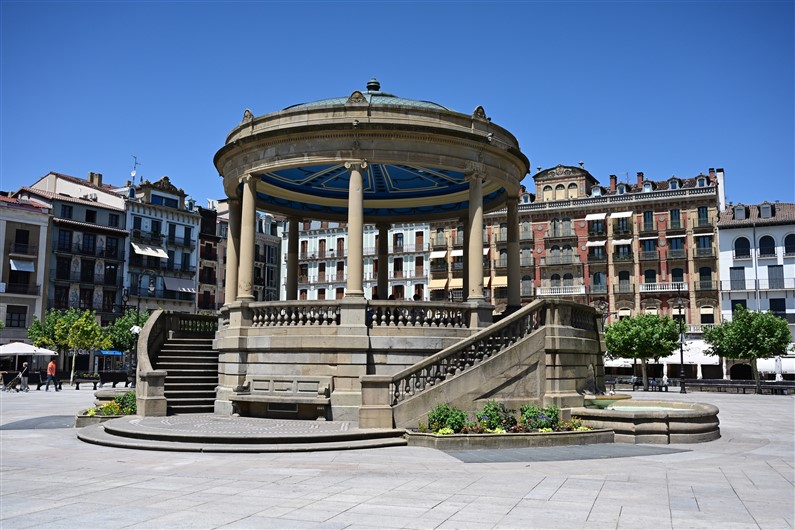
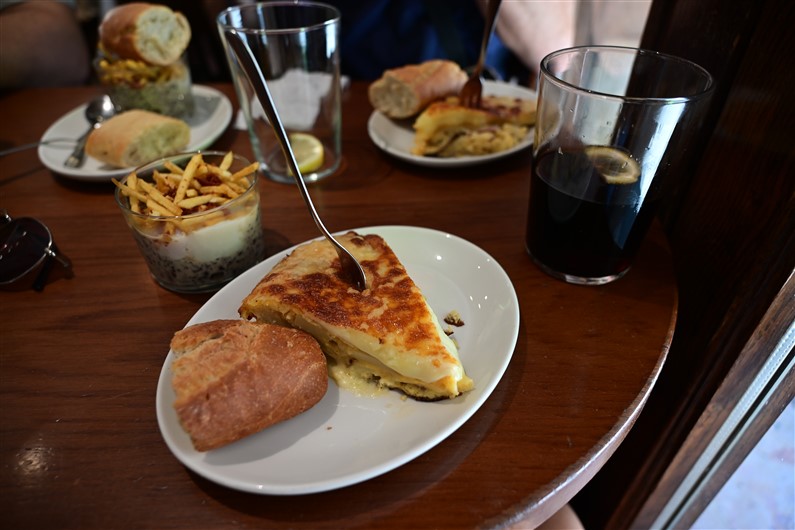
It’s the perfect spot to take a break on the terrace and watch the city come to life. For lunch, we actually tried El Gaucho, a place renowned for its pintxos and a true local institution located near the square.
Pamplona also has a history that is closely tied to the Way of St. James. Pilgrims pass through the city, following the route that enters via the Magdalena neighborhood before reaching the historic center.
With its city walls, the narrow streets of Casco Viejo, the lively squares, and the many reminders of its history, Pamplona has made us want to return and spend more time there.
But our road trip was just getting started. We still had a few kilometers to go before our next stop…
The Bardenas Reales: Off to the Desert
We hit the road again , heading toward the Bardenas Reales. And there, the scenery changed completely. Just a few hours earlier, we had been in the bustling streets of Pamplona. Now we found ourselves facing an almost lunar landscape.
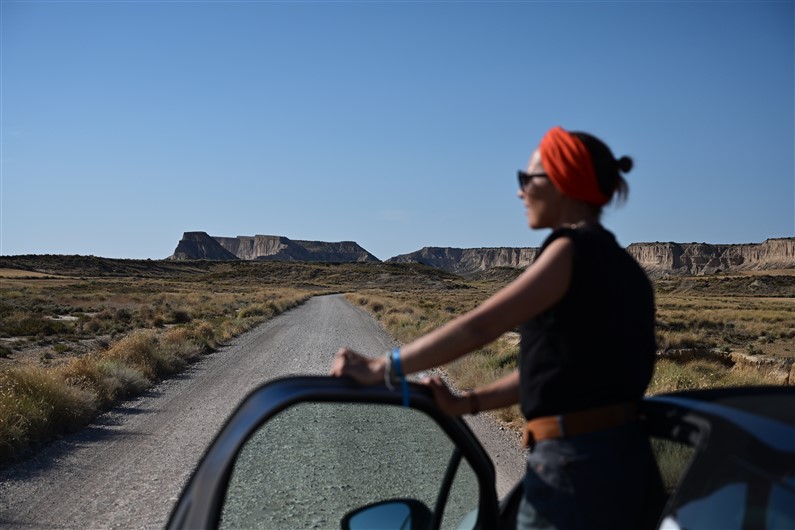
The Bardenas Reales were definitely on my bucket list. Ever since I first saw photos of this almost surreal landscape, I’d wanted to see this little slice of desert in southeastern Navarre with my own eyes .
Covering 42,500 hectares, the Bardenas Reales is a vast semidesert region shaped over time by water, wind, and erosion. Clay, gypsum, silt, sandstone, and more resistant rocks have gradually been sculpted to create these almost lunar-like landscapes, consisting of ravines, plateaus, cliffs, and isolated hills. The site has been designated a UNESCO Biosphere Reserve since 2000.
And contrary to what one might imagine when looking at the most famous photos of the Bardenas, there isn’t just one desert but several very different landscapes.
Three Bardenas, Three Landscapes
The Bardena Blanca is undoubtedly the best known, consisting of two parts: the Blanca Baja and the Blanca Alta. This is where you’ll find the most desert-like and most photographed landscapes: light-colored, almost white soil marked by gypsum, ravines, and above all , the famous cabezos—isolated rocky outcrops sculpted by erosion.
This is the area where Castildetierra is located —the iconic rock formation of the Bardenas and probably the undisputed star of Instagram photos. It’s also the part of the region we mainly explored during our getaway.
To the north and west, El Plano presents a completely different landscape. It is a vast plateau used primarily for farming, with a much more open, agricultural landscape. This is quite different from the image of an arid desert that people instinctively associate with the Bardenas.
And then there’s the Plana de la Negra, to the south, which lives up to its name quite well. The landscapes there are darker, redder, and, above all, much greener, with wooded areas and terrain that differs from that of the Bardena Blanca. To explore it, you’ll need to take a different route than the one we took from Arguedas.
In fact, it is this contrast that makes the region particularly interesting: as you travel through the Bardenas, you really get the impression that the landscape is changing several times.
For this first exploration, we focused on Bardena Blanca, the most accessible and visually spectacular part.
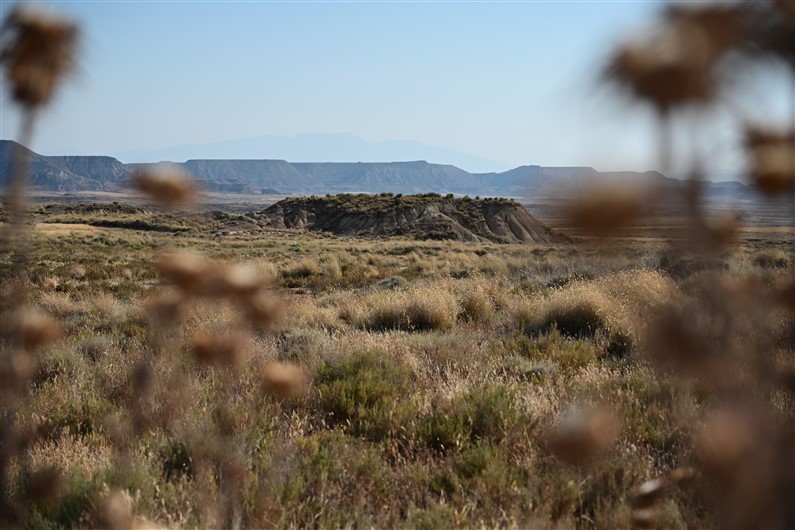
And I have to be honest: after having had the chance to explore some of America’s great national parks and the volcanic landscapes of the Canary Islands, I found the Bardenas to be a little overrated.
It’s still a truly amazing landscape, though, and above all, a very unique place in Europe. And let’s face it, being able to find yourself in a setting like this just a few hours from the Landes is pretty incredible.
This first visit has really made me want to come back and explore other parts of the Bardenas… and maybe even check them out by bike or in a 4×4, just to see what we missed this time.
Visiting the Bardenas Reales: My Practical Tips
If you’re planning to do what we did and explore the Bardenas by car, here are a few things I wish I’d known before we left.
-
Is it possible to visit the Bardenas without a 4×4?
Yes! For a first-time visit, a standard car is sufficient to drive the authorized route through Bardena Blanca, starting from the Arguedas entrance.
The main trail is about 25 kilometers long and leads to Castildetierra, among other places. It takes about 2 hours to complete, not counting the many photo stops you’re sure to want to make. This is also the only route authorized for exploring the site in a vehicle that isn’t a 4×4.
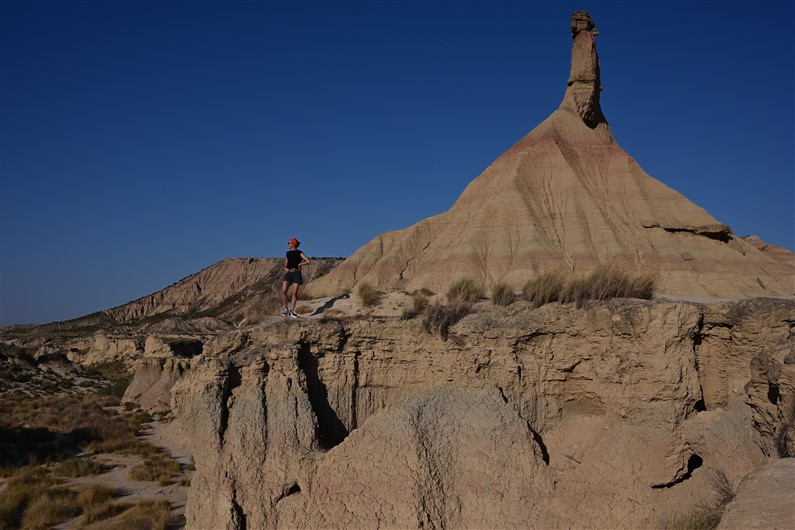
Please note, however: Stay on the authorized trails and under no circumstances leave the marked routes. The Bardenas is a fragile natural area, and certain zones may also be temporarily closed to protect wildlife, particularly birds of prey during their breeding season.
If you’d like to explore further, biking or a guided 4×4 tour might be good options. That’s actually what we’d like to try next time, since our road trip naturally gave us only a glimpse of this vast region.
-
Would you prefer in the morning or at the end of the day?
Personally, I recommend visiting at the end of the day. That’s when the light is at its most beautiful, and the landscape takes on magnificent shades of gold and orange. We actually chose to arrive in the Bardenas at the end of the day, and I think it was an excellent choice for enjoying the scenery.
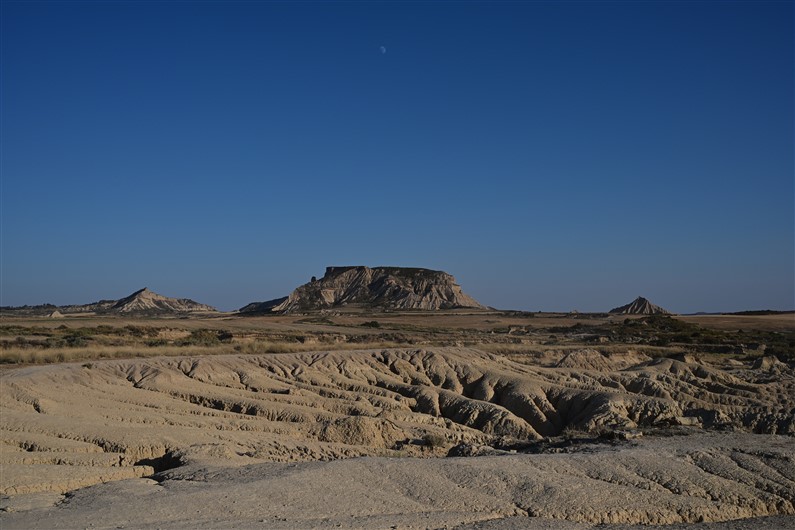
Be careful, however, not to confuse the park’s hours of operation with those of the visitor center.
The park is open from 8 a.m. until one hour before sunset. However, during peak season, the Finca de los Aguilares information center, near Arguedas, closes at 6 p.m. And I really recommend you make a note of that! We arrived just a few minutes before closing time, and at 5:55 p.m., it was clearly time to say goodbye.
My advice: The center is actually very helpful for getting a free pass, finding out the access requirements, and checking for any trail restrictions or closures. So if you plan to stop by, be sure to check the hours for that day and don’t wait until the last minute to get there.
-
And after the rain?
Another important point: weather conditions can affect access to the trails. The clay soils of the Bardenas can become very difficult—or even impassable—after heavy rains. Traffic restrictions may then be put in place.
So before you go, it’s definitely worth taking a quick look at the official website.
-
Be sure to bring water… and plan on washing your car!
In the summer, the sun beats down hard and there’s very little shade. Be sure to bring plenty to drink, especially if you plan to walk or ride a bike.
And here’s another tip that’s much less glamorous but just as important: plan to wash your car after the trip. The trails are particularly dusty, and our car had clearly changed color after just a few hours in the Bardenas. Let’s just say we brought back a little souvenir from the desert!
-
Where can I stay near the Bardenas?
If you’d like to extend your stay and spend the night near the Bardenas, there are several options available depending on your budget and travel style.
Bardenas Area: The Instagram Spot
You’ve probably already seen photos ofthe Aire de Bardenas hotel on Instagram. And you have to admit, the place is absolutely stunning. Its very contemporary architecture blends seamlessly into the landscape, and some rooms offer a direct view of the Bardenas. It’s clearly the perfect spot for a truly special night… but the prices match the setting.
So, for us, it wasn’t really the most sensible option for a simple two-day getaway.
The camping option
For a simpler and more economical option, the Bardenas Campground might be a good alternative to the Aire de Bardenas hotel. However, some friends who stayed there with their van told us it was a bit noisy because it’s close to the road, though the pool was really nice for cooling off.
If you’re traveling in a van or RV, you should know that the towns of Arguedas and Valtierra have built two RV parking areas where you can park day or night with all the comforts and amenities that this type of facility has to offer.
However, please be aware of one thing: camping or spending the night freely within the Bardenas region is prohibited. You must therefore use authorized campgrounds and campsites outside the park.
Personally, we spent the night at an Airbnb in Tudela, which is also a good option and lets you explore the city before or after your visit to the Bardenas. But I wouldn’t recommend the room because, even though everything was clean, we didn’t like the owner, and the air conditioner was noisy all night.
Day 2: Olite and the Foz de Lumbier
After spending the evening in the Bardenas area, we hit the road again the next day with two new stops on our itinerary: Olite and the Foz de Lumbier.
Olite: a royal palace straight out of a fairy tale
Our first real stop of the day was Olite. And as soon as we got there, we fell in love with it.
The silhouette of the Royal Palace of Olite literally towers over the town, giving the whole place the feel of a medieval setting.
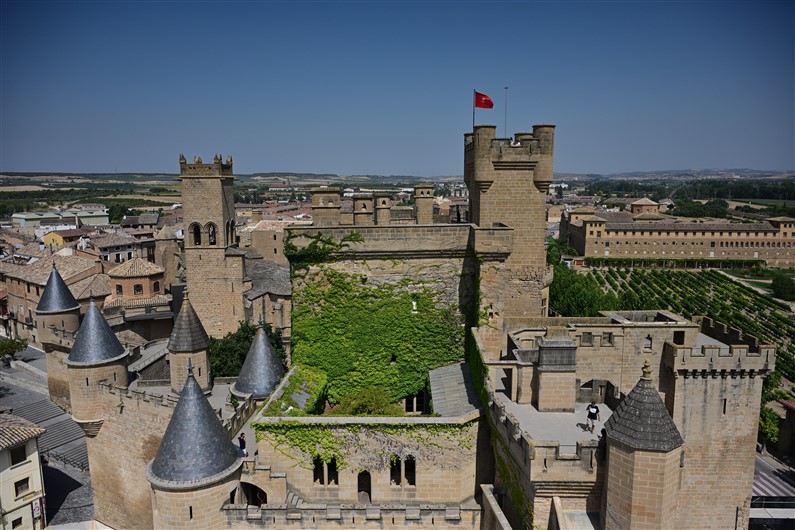
The palace was one of the residences of the kings of Navarre and experienced its golden age during the reign of Charles III the Noble, in the late 14th and early 15th centuries. The king undertook major renovations to transform the old palace into a sumptuous residence, complete with numerous towers, galleries, gardens, and richly decorated rooms.
In its day, the palace was considered one of the most beautiful in Europe. Today, even though the monument we see is partly the result of extensive restoration work, it remains spectacular.
We really enjoyed our visit here. You can climb the various towers, wander through the courtyards, explore the historic rooms, and, above all, take in the magnificent views of the rooftops of Olite and the surrounding countryside.
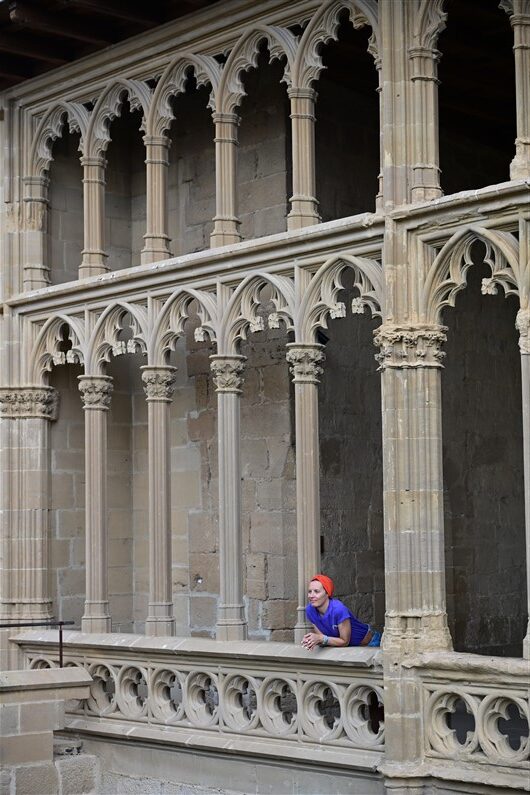
The historic center is also worth a short stroll: cobblestone streets, old houses, Renaissance palaces, churches, and the remains of the old city walls. Plaza Carlos III, in particular, is a great starting point for exploring the city. That’s where we enjoyed some tapas before getting back in our car to continue our itinerary.
On the way, we also made a quick stop in Sangüesa. And let’s be honest: we weren’t really blown away by it. The town certainly has its heritage and history, particularly centered around the Santa María la Real Church and the section of the Camino de Santiago that passes through it, but on a two-day itinerary, we personally didn’t find it interesting enough to spend any more time there.
That’s also part of the reality of a road trip: not every stop is necessarily a favorite!
La Foz de Lumbier: A Break in Nature
The final stop on our getaway: the Foz de Lumbier. After the desert-like landscapes of the Bardenas and the ancient stone buildings of Olite, we wanted to wrap up these two days with one last spot in nature.
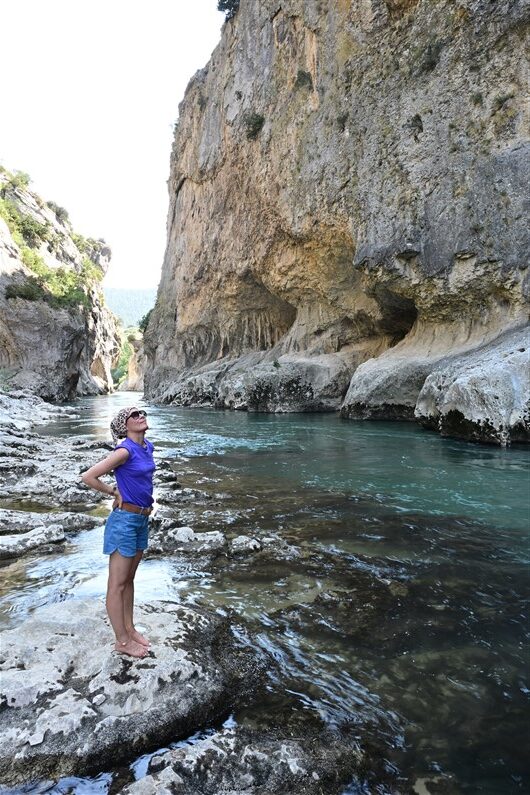
The Foz de Lumbier is an impressive gorge carved by the Irati River into the limestone cliffs. The site is designated as a nature reserve and serves as a refuge for many birds of prey, including griffon vultures.
So be sure to look up!
The walk follows part of the old Vía Verde del Irati railroad track, which makes it fairly accessible. Two tunnels cut through the rock, adding a touch of adventure to the walk.
My tip for the walk
Parking is paid during the season—€3 when we were there—and is located right next to the trailhead.
For a fairly short walk, we recommend heading deeper into the gorge and enjoying the section leading up to the second tunnel in particular. You can take the paths on the right to go down to the water and cool off your legs.
After the second tunnel, we personally didn’t see much point in continuing.
Two Days in Navarre: My Take on It
As you may have noticed, in just two days, we ended up discovering a wide variety of landscapes: Pamplona with its capital-city atmosphere, the desert-like landscapes of the Bardenas, the medieval palace in Olite, and the lush cliffs of the Foz de Lumbier.
And that’s what I liked best about this getaway: that feeling of being in a completely different setting after traveling just a few dozen or a few hundred kilometers.
La proximité avec l’Espagne est vraiment un immense avantage quand on passe l’été dans le sud des Landes. En trois heures de route maximum, un autre pays devient notre terrain de jeu.
J’espère que vous aussi vous aurez envie de découvrir ces paysages. Si vous avez des questions complémentaires, surtout, n’hésitez pas à les poser en commentaires, ou juste à me dire si vous connaissiez déjà cette région.
See you soon for new adventures!