


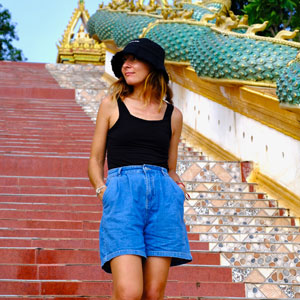
There are trips we plan well in advance. And then there are those we choose almost on instinct, because at some point, we simply need them.
For us, Malta was exactly that. A break. A breath of fresh air.
After these past few very unusual months (as you’ll learn in this article, I’m going through a difficult time after being diagnosed with colon cancer in early 2026), we needed to treat ourselves to a week-long getaway that would do us some good between chemotherapy sessions—with sunshine, the sea, and plenty of walking without getting too exhausted. On the advice of the doctors and nurses, we also needed to stick to a destination in Europe—in a relatively “safe” country—without too many unexpected complications or unnecessary fatigue.
So we started looking around, examining the map from a different perspective, through this new lens. And then, as we dug a little deeper, we realized that, despite all the trips Antony had already taken, Malta was one of the countries he had never visited.
It just goes to show that even after years of traveling the world, there are still obvious things we haven’t come across yet.
And honestly, what a great idea! Because Malta isn’t just a “convenient” destination.
It’s a wonderfully charming blend of the Mediterranean, history, honey-colored old stone buildings, small harbors, hearty local sandwiches, sunshine, and sunsets that make you want to slow down.
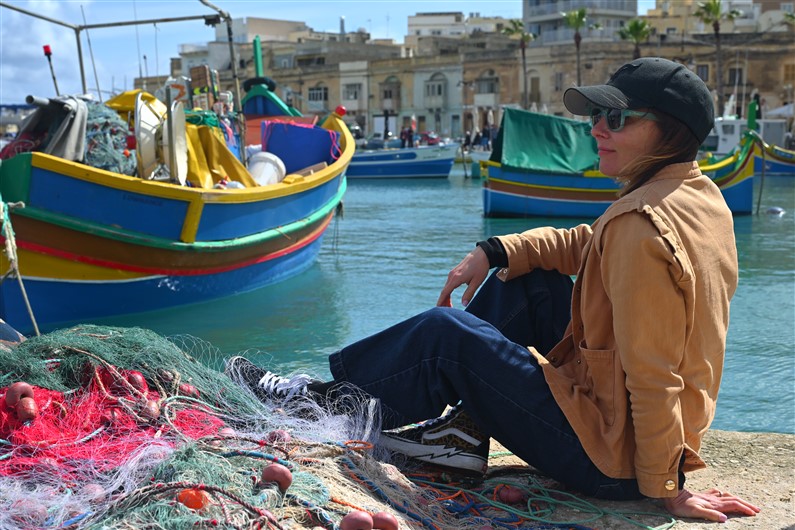
If you’re looking for ideas for a week-long trip in Europe—without necessarily renting a car, on a reasonable budget, and with plenty of charm—I’ll share our itinerary, our favorite spots, and all my tips here.
Before You Go to Malta: What You Need to Know
- Flights: For this trip, we took a Ryanair flight from Nantes Airport. The big advantage is that the island is very well connected, often at reasonable fares—if you book at the right time and avoid school vacation periods. Personally, I paid about 150 euros for a round-trip ticket, including a 10-kg carry-on suitcase and a small additional bag. The flight from Nantes to Malta takes just under three hours.
- Time difference: There isn’t one! It’s also less tiring because there’s no “jet lag.” You can start enjoying the island’s beauty right away.
- Currency and required identification: Since Malta joined the European Union in 2004, the currency is the euro, and all you need to travel is your ID card. As for prices, restaurant prices are generally the same as back home. If you want to save money on this part of your budget, I recommend sticking to local sandwiches instead, but I’ll tell you more about that later.
- Language: Here , too , there’s a major advantage—English is spoken absolutely everywhere. And that’s no coincidence. The island was a British colony for over 150 years, until it gained independence in 1964. English has therefore remained one of the official languages, alongside Maltese. The result: whether it’s public transportation, restaurants, or shops, everything is very easy to access, even without speaking a word of Maltese.
- Getting Around Malta: Upon arrival at the airport, you have several options for traveling to cities throughout the country: local buses, shuttles, or taxis through Bolt, eCabs, or Uber.
We quickly gave up on the idea of renting a car, even though the rental rates are very attractive.
First of all, becausein Malta, they drive on the left. And that alone takes a little getting used to 😅 But mainly because you can get around just fine without one. Plus, on weekends and during the holidays, traffic can get really heavy.
Public buses provide excellent service around the island, for about €2 for two hours.
You hop on, take it all in, and let yourself be carried along… And in the end, it’s all part of the journey.
You can pay directly with your credit card or in cash on the bus, but please note that travel cards are available for purchase at ticket offices, including at the airport and at terminals such as the Valletta Terminal, the Buġibba Terminal, and Sliema Ferries.
Also worth noting: there are some very convenient transit hubs, such as Bombi, which make it easy to reach various parts of the island, including Mdina, Rabat, Marsaxlokk, and Zurrieq. Google Maps shows this quite clearly if you search for routes.
- Accommodations: As is often the case in popular European destinations, prices can quickly rise in Malta, especially in central areas like Valletta. It’s therefore best to plan ahead to find well-located accommodations at a good price. One thing to watch out for: we’ve seen several reviews mentioning unpleasant surprises on Airbnb, so be sure to read the reviews carefully before booking. In Malta, it’s very common to rent a room in a shared apartment, which is the option we chose. We used Airbnb and found a very simple, unpretentious room in a shared apartment, but with a private bathroom—which was essential for us. We shared the living room and kitchen, had access to the washing machine, and each had our own fridge and closets. It was perfect for preparing our breakfasts and some dinners at home. It was also a great opportunity to spend time with our roommates. Right next door was a SPAR supermarket open until 10 p.m., which was very convenient when coming home from a day out. The apartment wasn’t located in Valletta itself, but in the well-connected Ta’Xbiex neighborhood, which allowed us to easily reach various points of interest while avoiding the crowds. This neighborhood, overlooking the harbor, also has the advantage of being just a stone’s throw from Manoel Island.
Valletta, First Impression
When you first set foot in Valletta, there’s that brief moment when you slow down without even realizing it.
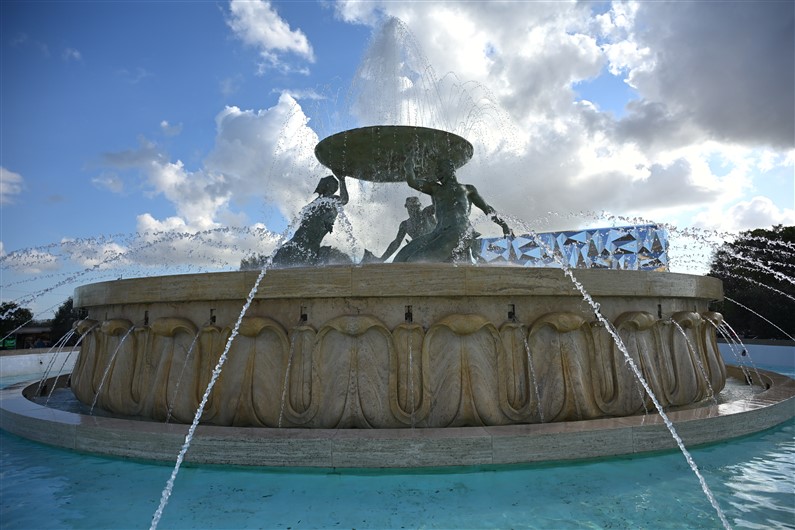
Even before crossing the city walls, visitors are greeted by the majestic Triton Fountain. With its three bronze figures supporting a massive basin, it seems to stand guard at the entrance to the capital. You can’t miss it: it marks the transition from the modern city to the historic city you’re about to explore.
Then come the honey-colored stones, bathed in that unique light that seems to envelop the entire island. The golden facades are adorned with warm hues, the narrow streets wind up and down toward the harbor, and every street corner seems to tell a piece of Maltese history.
Founded by the Knights of the Order of St. John after the Great Siege of 1565, Valletta exudes an almost solemn elegance. Yet it never gives the impression of being frozen in the past. Behind the monuments and Baroque churches, the city remains vibrant, brought to life by its residents, its outdoor cafes, and its small shops.
We took the time to just wander around, with no real destination in mind. That’s probably the best way to explore a city—and even more so in Valletta. Walking down a sloping street, coming upon a breathtaking view of the Grand Harbor, stopping for a few minutes in a shaded square, and then setting off again at random.
Among the must-see free attractions, I highly recommend watching the cannon firing at the Saluting Battery. Perched on the ramparts overlooking the Grand Port, this historic ceremonial platform offers one of the most beautiful views of the city. Every day, the time is still marked by two blank shots, at noon and 4 p.m. The spectacle is brief, but the atmosphere is unique—especially when you consider that this site has been in use since Valletta’s founding in the 16th century. Between the history, the view of the Three Cities, and the atmosphere of the place, it was a stop we absolutely loved.
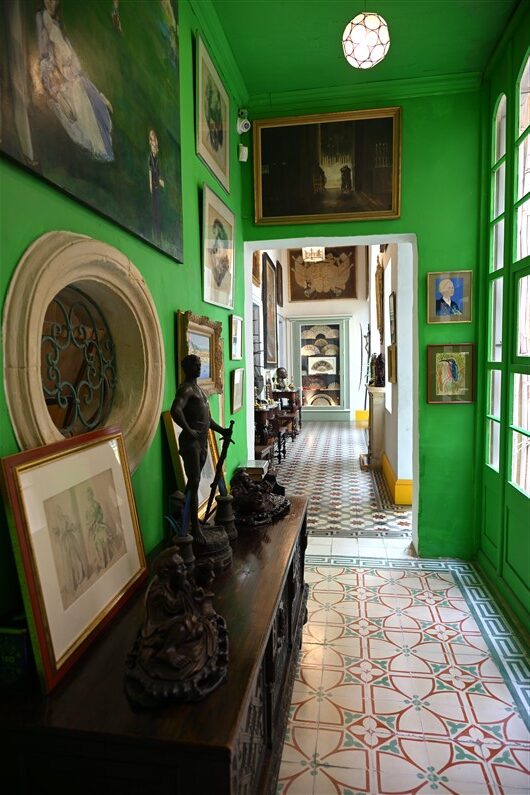
We also stepped inside Casa Rocca Piccola, and it’s exactly the kind of visit we love: you step into a home, into a story, into a way of life. Behind the walls of this still-inhabited palace, you discover another side of Malta—one that’s more intimate and deeply endearing.
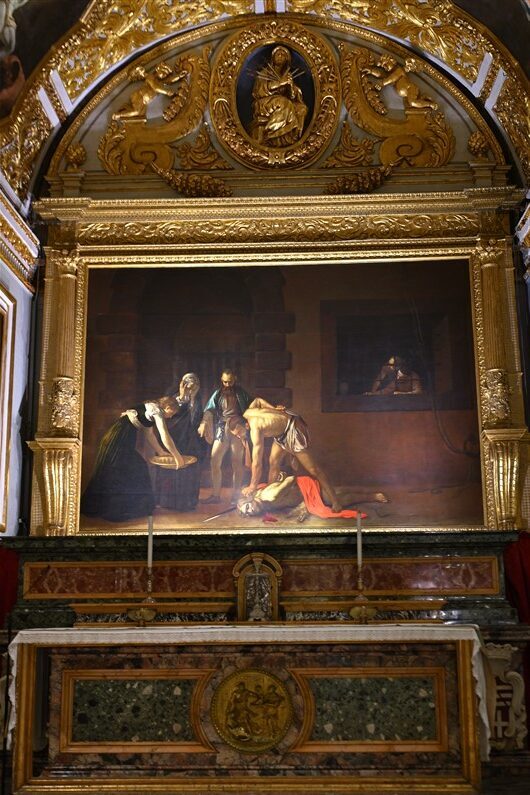
Finally, if there’s one last sight in Valletta you shouldn’t miss, it’s St. John’s Co-Cathedral. From the outside, it looks almost understated. But once you step inside, the effect is striking. Gilded details, marble, painted ceilings… every corner seems more impressive than the last.
Even if you’re not passionate about art or history, it’s hard not to be amazed by the richness of this place. You quickly understand why it’s considered one of Malta’s most beautiful monuments.
But what also attracts many visitors is the presence of a true treasure: Caravaggio’s *The Beheading of Saint John the Baptist*. This immense canvas, painted in 1608 while the artist was staying in Malta, is often considered one of his masterpieces. It is, in fact, still on display in the very place for which it was created: the cathedral’s oratory.
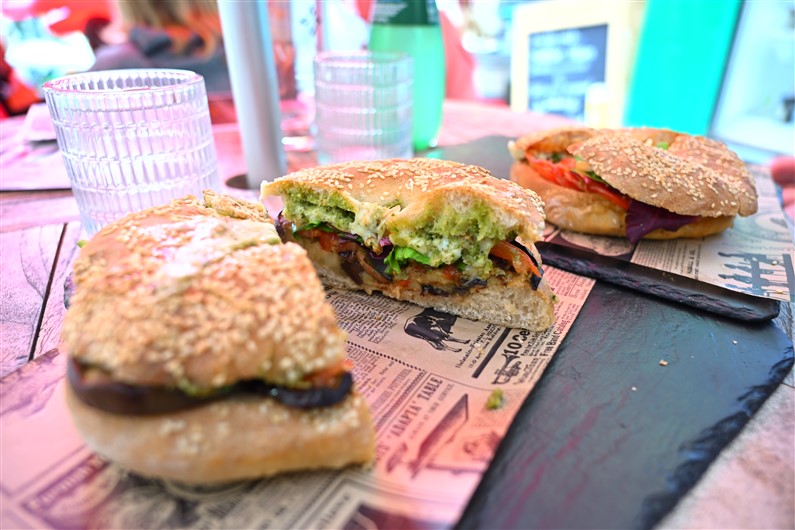
For lunch, as usual, we kept it simple but tasty! A sandwich at Piadina Caffè—fresh, quick, and perfect for getting on with the day without lingering too long.
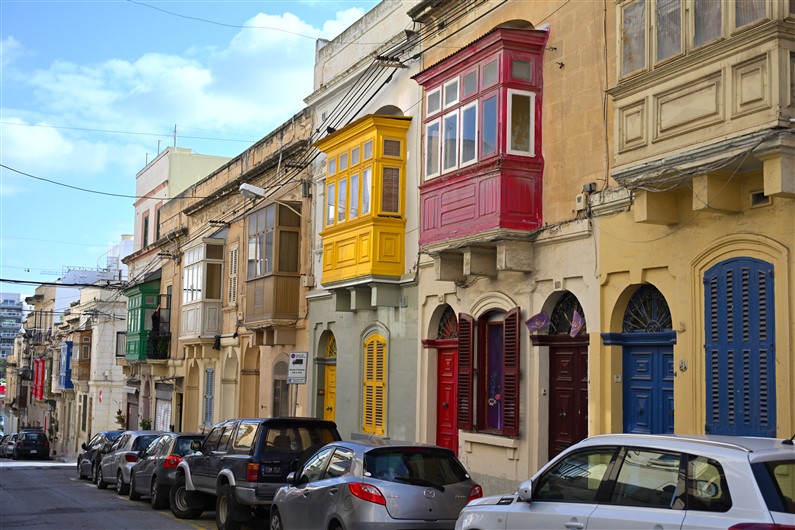
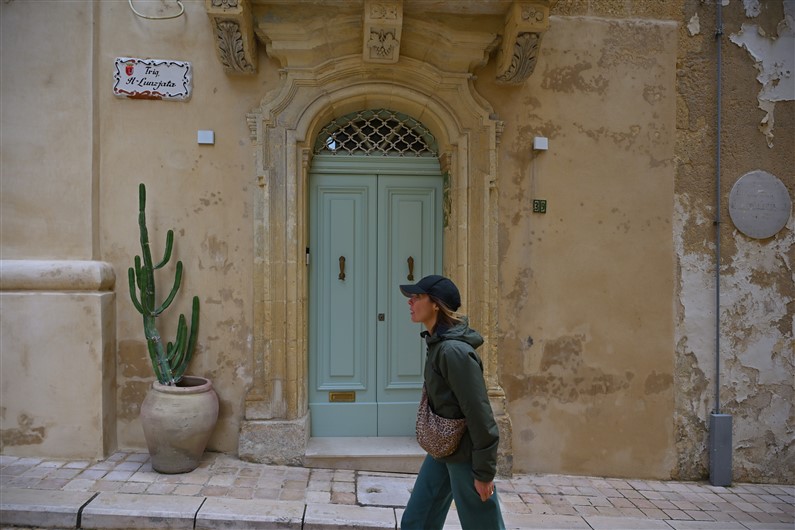
Finally, if, like me, you love photography, Valletta is also a wonderful playground. I spent a lot of time looking up at the famous Maltese balconies that adorn the city’s facades. Some are painted in bright colors, others bear the marks of time, but all lend incredible charm to the capital’s streets. Their origins are said to date back to the Arab influence of the mashrabiyya—those enclosed windows that allow residents to observe the street while preserving their privacy. Over the centuries, the Maltese have embraced this architectural feature, turning it into one of the island’s symbols. Between the play of light on the golden stone, the colorful doors, and these balconies suspended above the narrow streets, every stroll becomes an opportunity to break out the camera.
D’ailleurs, j’ai deux spots sympas rien que pour vous :
- At the end of the day, head to Triq iz-Zekka (Old Mint Street) for a lovely viewpoint with an incredible view.
- In the afternoon, we headed to Rue de Liesse (where Luciano’s restaurant is located) for another nice photo spot.
Birgu, one of my fondest memories
I don’t think I expected to like Birgu this much.
We took the bus there—lines A2, 3, or 4 from the Triton Fountain area—without really knowing what to expect. We figured it would just be a quick getaway for a few hours before heading back to Valletta.
And then, as soon as we arrived, the pace of things changed.
From the very first streets, we sensed a different atmosphere—quieter, more authentic, almost more intimate than the capital. Here, there are no wide avenues or throngs of people passing by. The narrow alleys invite you to wander, the facades bear the marks of time, and every street corner seems to tell a story.
Birgu is one of the famous Three Cities and was long the heart of Maltese life, even before Valletta was built. You can still feel that history today through its fortifications, small squares, and harbor, which give it a unique charm.
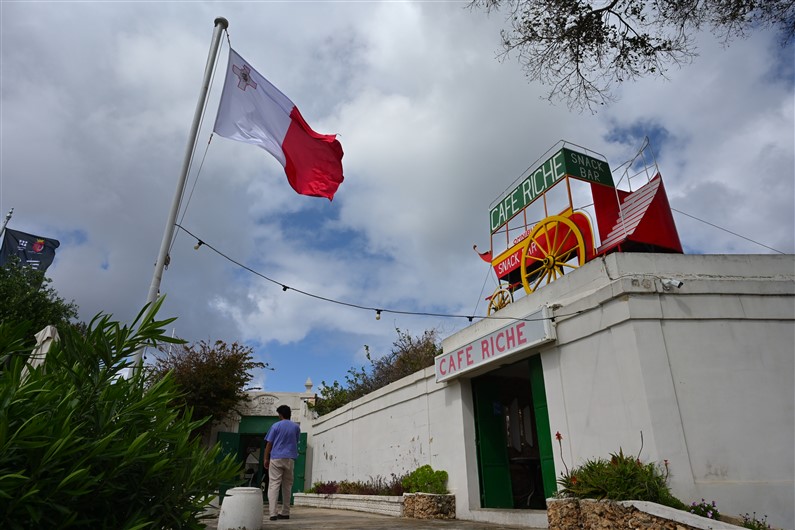
We had a leisurely lunch at Café Riche before continuing our stroll with no real plan. That’s actually what I recommend: take the time to get a little lost.
At the tip of the peninsula stands Fort Saint-Ange, the imposing guardian of the Grand Port. We decided not to visit it, preferring to enjoy the mild afternoon weather as we strolled along the docks.
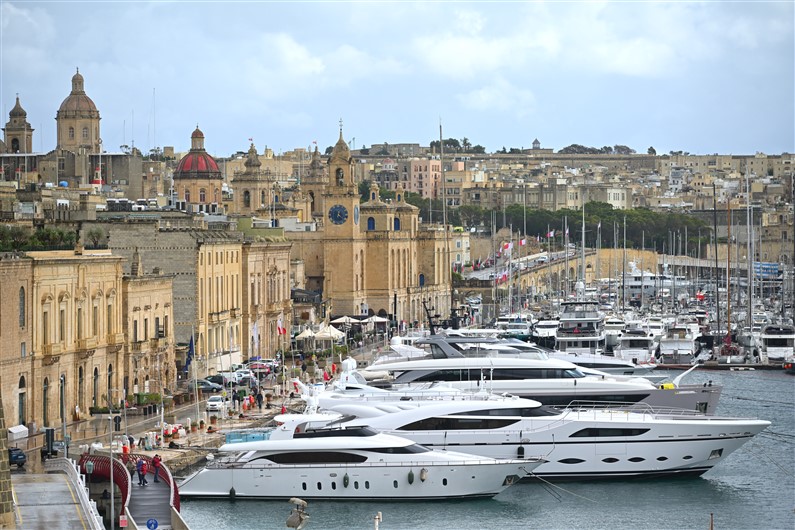
We sat for a few moments facing the water, watching the huge yachts moored in the marina. Some of them are simply enormous. There’s something fascinating about watching this quiet ballet between the traditional fishing boats, the sailboats, and these veritable floating palaces, which stand in stark contrast to the old stone buildings of Birgu.
The light was slowly beginning to fade, the facades were taking on golden hues, and the harbor was reflected in the almost still water… It was peaceful, simple, and incredibly beautiful.
Looking back, Birgu is probably one of my fondest memories of Malta. Maybe because we weren’t expecting anything in particular. Maybe also because it’s exactly the kind of place I love to discover while traveling: a place that doesn’t try to impress, but ends up winning you over completely.
Mdina and Rabat: Two Different Atmospheres in One Stop
After exploring the streets of Valletta and taking the time to wander around Birgu, we wanted to discover another side of Malta. Heading to Mdina and Rabat.
These two neighboring cities alone tell much of the island’s history. As the former capital of Malta, Mdina has seen the Phoenicians, Romans, Arabs, and Knights of the Order of St. John come and go. Right next door, Rabat has developed over the centuries while retaining a more down-to-earth and authentic atmosphere. Even today, it takes just a few minutes to walk from one to the other, but the atmosphere changes completely.
From Valletta, we took the bus to Mdina and Rabat, specifically the No. 53, which is very convenient for getting there.
And as soon as you arrive in Mdina, you’re captivated by its charm. To enter the city, you must pass through its impressive main gate and walk along its ramparts.
The city is nicknamed “The Silent One,” and for good reason. Behind its fortifications, everything seems to slow down. Cars are a rare sight here, since only residents’ vehicles are allowed on the streets. With no traffic noise, footsteps echo softly on the cobblestones, and you quickly find yourself swept up in the peaceful atmosphere of the place.
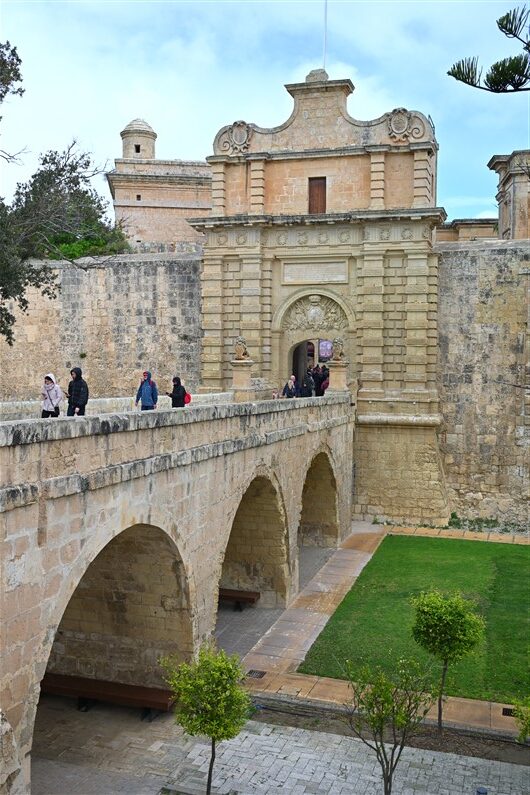
Even though there were a lot of visitors during our visit, there are enough streets for everyone to find their own quiet spot. I loved getting lost in this maze of narrow streets lined with tall, honey-colored stone walls, admiring the details of the facades, and stumbling upon a few balconies, old doors, or bougainvillea that added splashes of color.
And then there was that little ongoing spectacle that added to the town’s charm: the ballet of the horse-drawn carriages. Every so often, the sound of hooves on the cobblestones would break the silence for a few seconds before giving way to calm once again.
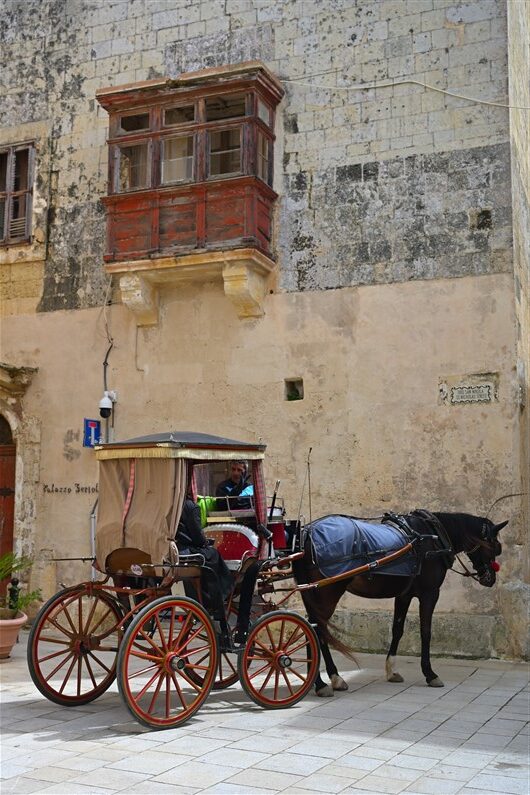
This is the kind of place where you definitely shouldn’t rush around trying to see all the sights. My fondest memory of Mdina is simply that aimless stroll, wandering at random through the narrow streets and soaking up the city’s unique atmosphere.
And then, as we head back down toward Rabat, the pace changes slightly.
It’s livelier, more local, but just as pleasant. Locals chat in front of the shops, there are more outdoor seating areas, and there’s a small-town atmosphere where life goes on at a leisurely pace.
That’s also where we made a must-see stop—a spot you simply can’t miss: Serkin Crystal Palace Bar. It’s one of the most famous places in Malta to try the famous pastizzi. These small puff pastries, filled with ricotta or pea purée, are as much a part of the local culinary heritage as the ramparts of Mdina are part of the country’s historical heritage.
It’s hot, crispy, nice and greasy… and honestly delicious. And at about 60 centimes each, we’re not going to pretend to hesitate for long.
We sat down for a few minutes to enjoy them while they were still warm before continuing our walk.
Zurrieq and Marsaxlokk: Between Dizziness and Serenity
After exploring Malta’s historic cities, we continued our tour of the island southward over the next few days, visiting two very different but perfectly complementary destinations: Zurrieq and Marsaxlokk.
We started with Zurrieq, a small, authentic village best known for being home to one of Malta’s most famous landmarks: the Blue Grotto.
As we have done since the beginning of our trip, we continued to get around by public transportation. From Valletta, take bus number 74 to reach the site in about 45 minutes to an hour, depending on traffic. A very convenient way to explore the island without a car, and one that also lets you enjoy the scenery along the way.
And as soon as you reach the heights above the Blue Grotto, the show begins.
Here, there’s not much to do—just look. The limestone cliffs plunge into an incredibly blue sea; small boats pass through the natural arches carved out by erosion; and the light sometimes makes it seem as if the water is changing color from one moment to the next.
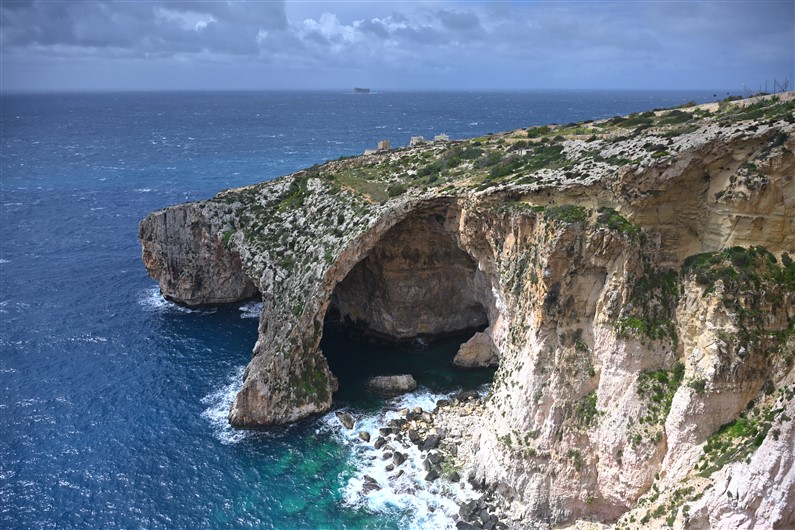
The Blue Grotto truly lives up to its name. Formed over time by the movements of the sea, it consists of several sea caves that can be explored by boat when conditions permit. We chose to enjoy the view from land, and it was already a truly contemplative experience.
To continue our day, we then took a Bolt from Zurrieq to Marsaxlokk. It was a simple and convenient option that allowed us to keep exploring without wasting too much time on transportation.
And then, a complete change of atmosphere.
Marsaxlokk is a charming little fishing port… but it’s very touristy. The village is best known for its luzzu—those famous, brightly colored traditional Maltese boats, often decorated with the Eye of Osiris, which is said to protect fishermen at sea.
It’s a place you really get to know by walking around. We enjoyed strolling along the harbor, watching the boats rock gently on the water, observing the fishermen, and soaking up the simple, authentic atmosphere.
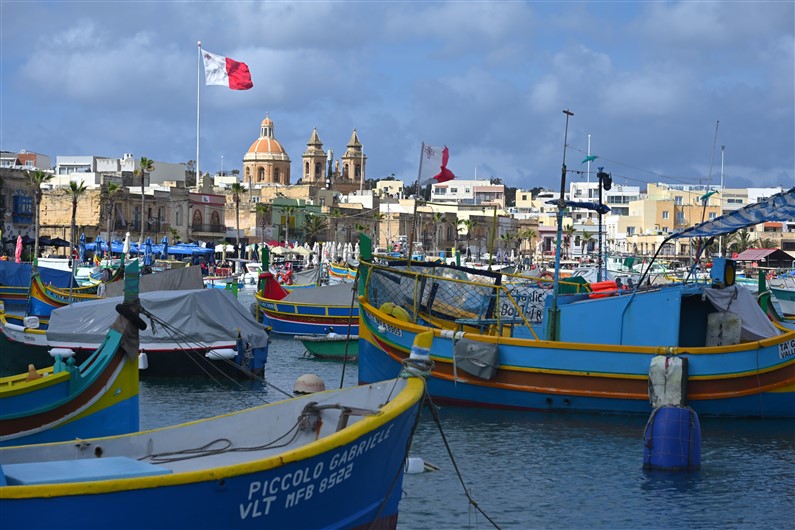
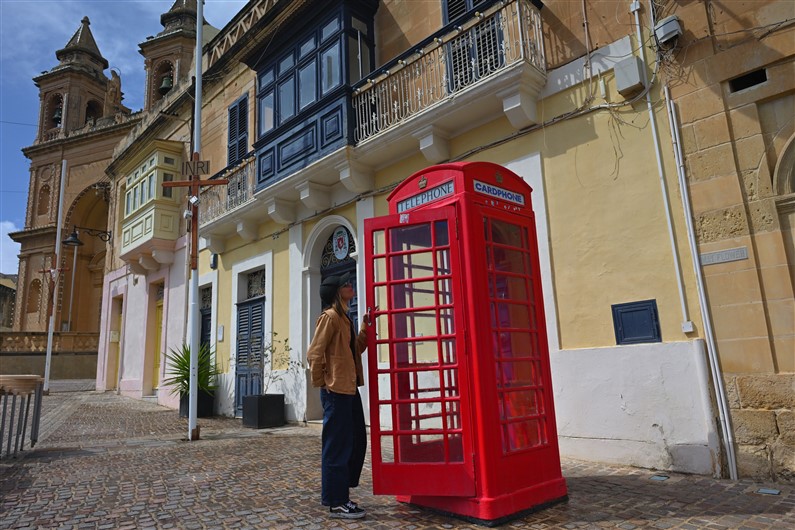
The colorful facades, the terraces facing the sea, and the boats lined up side by side create an almost perfect setting for photography enthusiasts. But aside from these colorful boats, don’t expect to see an exceptional little fishing port.
Two very different places, but they really capture what I loved about the island: in just a few kilometers, you can go from a spectacular landscape to a small harbor where you can simply take the time to relax.
Gozo, an island within an island
We couldn’t come to Malta without taking the time to explore Gozo.
Smaller, wilder, and better preserved than the main island, Gozo offers a different side of the Maltese archipelago. Here, you’ll find more natural landscapes, quiet villages, and a sense of space that you feel immediately upon arrival.
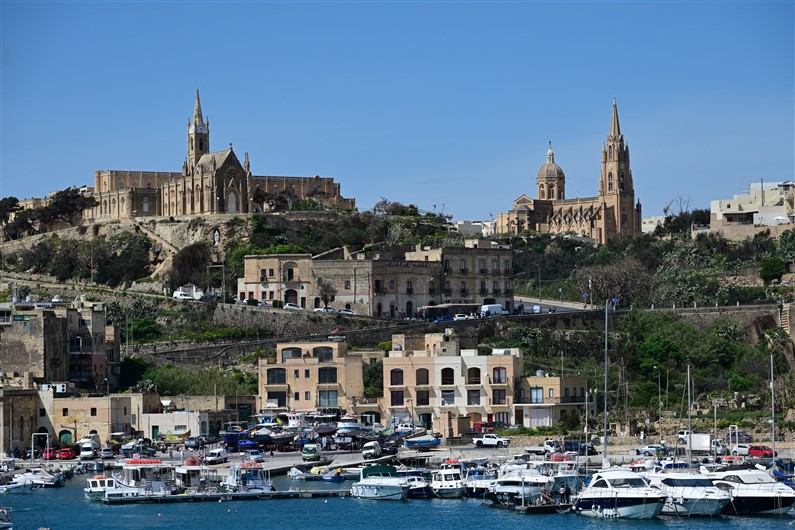
There are several ways to get to Gozo from Valletta. You can take the Gozo Highspeed, a high-speed ferry that saves time, but its schedule depends heavily on weather conditions. The other option—the one we chose—is to take the Gozo Channel Line ferry further north on the island.
As we had been doing since the start of our trip, we continued to use public transportation. From Valletta, the X300 bus takes you to the ferry, but we preferred to take the 41 bus near our apartment, which isn’t as crowded. The ferry makes the crossing very easily in about 20 minutes , and there’s no need to buy your tickets in advance—you can buy them on board.
During the crossing, we pass Comino, the small island located between Malta and Gozo. Well known for its Blue Lagoon with its turquoise waters, it attracts many (too many) visitors who come to swim in a postcard-perfect setting. We simply enjoyed the view from the boat, without stopping this time, since Gozo alone was well worth a full day.
In Gozo, we deliberately avoided the tour buses that offer back-to-back tours of the main attractions. For families with children or for those who want to make the most of their day, this can be an attractive option, but you sometimes have to haggle over the prices. As for us, we wanted to take our time, get around more freely, and enjoy the places at our own pace.
We started with Victoria, the capital of Gozo. Located in the heart of the island, this small town is dominated by the Citadel, an ancient fortified city perched on a hilltop, which long served as a refuge for the local population during various invasions.
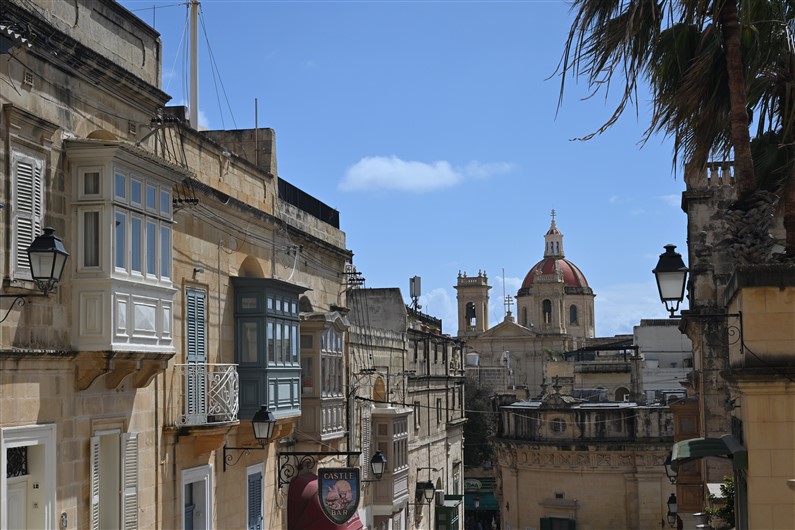
We strolled leisurely through the narrow streets, lively squares, and golden-stone buildings. This blend of history and local life gives it a very special atmosphere: you can sense that Victoria isn’t just a stopover for visitors, but a real city where residents still go about their daily lives. We had lunch at Maya’s Kitchen, a great spot to take a break and sample local specialties like bigilla—a traditional fava bean purée—Maltese sausage, which is fragrant and peppery, and goat cheese, a staple of the local cuisine.
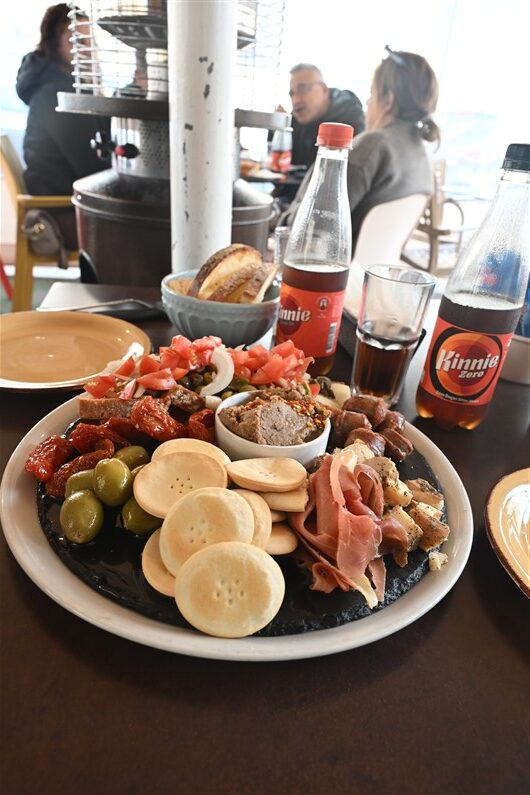
And right across from the bus stop, it’s impossible to resist an ice cream at Vanilla +.
Then we continued exploring the island, heading toward Dwejra. And that’s where I really fell in love with the place.
The Blue Hole Viewpoint offers a truly spectacular view: the cliffs plunge into a deep blue sea, and the rock formations sculpted by time give the place an almost surreal atmosphere. This is also where some scenes from *Game of Thrones* were filmed, and honestly, it’s easy to see why this location was chosen.
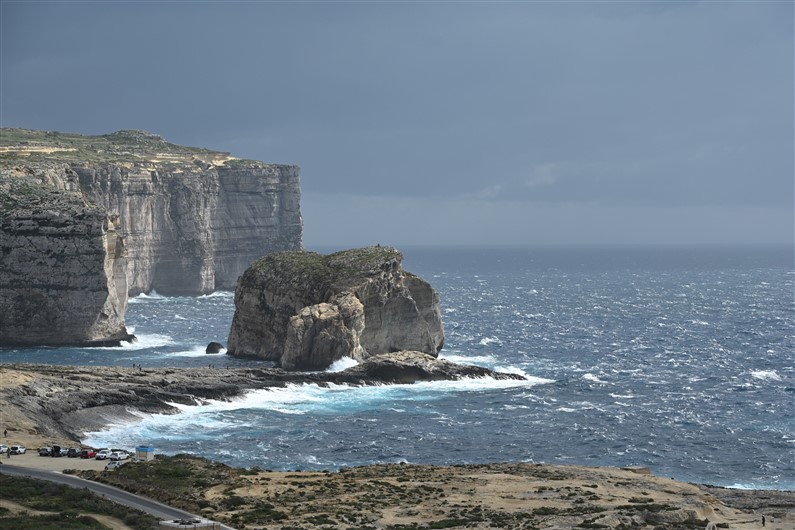
What I liked about Gozo was the feeling of being in a more unpolished version of Malta. Fewer colorful facades and more open spaces, less hustle and bustle and more nature.
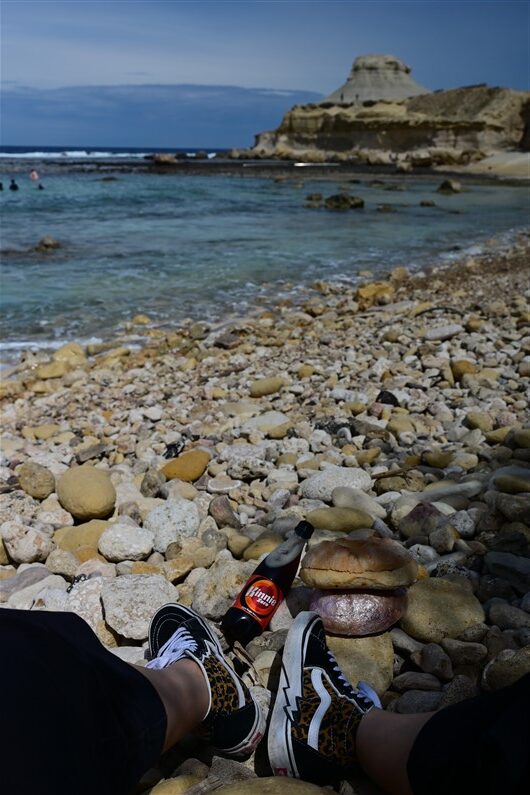
On our second day on Gozo, we found a quieter spot near the Marsalforn salt pans. It was a more secluded place where we simply took the time to relax.
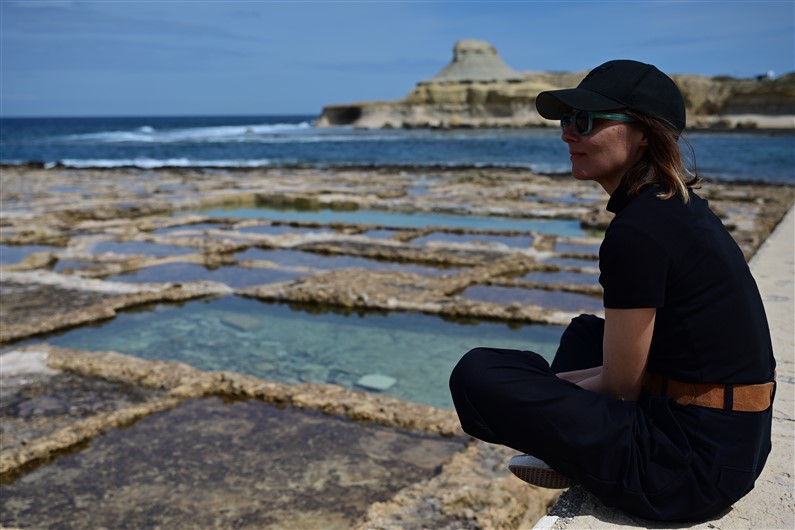
We settled in with a ftira—that famous Maltese stuffed bread, perfect for a quick meal—and a zero-calorie Kinnie, the local drink with a slightly bitter taste that we’d come to appreciate over the course of our stay.
One disappointment on the island, though: we found Ramla Bay to be overrated. The beach is crowded and really quite small. And it takes a while to get there, so I’d be tempted to say you can skip it.
Before we go…
If there’s one last cool thing to see in Malta, it’s Mosta, a town known for its impressive dome. Bus 41 goes there, making it a fairly easy stop to include in an itinerary without a car.
That wraps up this wonderful week in Malta! I hope I’ve inspired you to book your tickets so you can discover the island for yourselves and experience its laid-back lifestyle.
As always, I’m available to answer any questions you may have.
See you soon for more adventures. And if you’re interested, feel free to check out other posts on the blog!