



There are trips that you spend months planning, with a meticulously detailed itinerary, reservations everywhere, and a list of things to see that’s as long as your arm.
And then there are those little getaways lasting just a few days—the ones where you simply say to yourself, “Hey, why don’t we go see what’s on the other side of the border?” And when you’re staying in the southern Landes region, it’s just a short trip to Spain. That’s what led us to discover the coastline of the Spanish Basque Country.
Just three days, a car, and a pretty simple idea: set out from San Sebastián, drive along the coast to Bilbao, and enjoy the journey as much as the two cities themselves.
What I loved most about this trip was the diversity of the ever-changing landscapes. A large bay, a fishing village, cliffs that tell the story of millions of years, a spectacular little islet, and, to top it all off, the utterly crazy architecture of the Guggenheim.
Three days, then, but with that pleasant feeling of having truly discovered new places.
Here’s our itinerary, our favorite spots, the places we’ve tried out, and a few tips that might come in handy if you’d like to take this road trip along the Spanish Basque Coast yourself.
Day 1 — San Sebastián: A Day by the Sea and with Pintxos
The first stop on our getaway: San Sebastián, or Donostia in Basque.
The city is nestled around the magnificent La Concha Bay, tucked between the mountains and the ocean. And even though we arrived with only one day ahead of us, we quickly realized we’d have to make some choices.
So our goal wasn’t to see everything, but rather to explore the city at our own pace.
Where can you park your car in San Sebastián?
If you’re arriving by car, I suggest you don’t waste your time trying to find a parking spot downtown.
We chose the Igara Park-and-Ride, where we were able to park for free (you still have to take a ticket) before heading into town by bus. And don’t worry—you can pay directly with a credit card inside, which is very convenient and hassle-free.
About fifteen minutes later, we were at the coast. This really made our lives easier: no traffic in the city center, no overpriced parking, and best of all, once we parked the car, we could explore San Sebastián on foot.
Soaring to New Heights at Monte Igueldo
To kick off our exploration, we headed to Monte Igueldo. And if you had to choose just one thing to do up there, it would probably be… to take in the view.
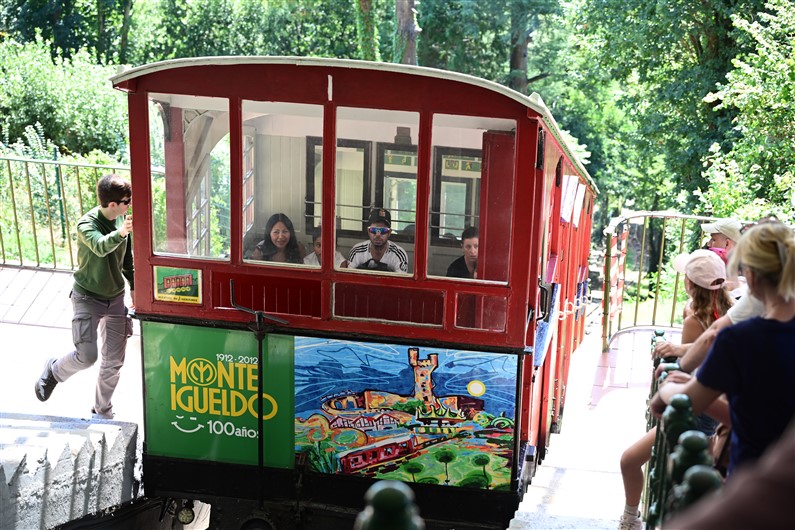
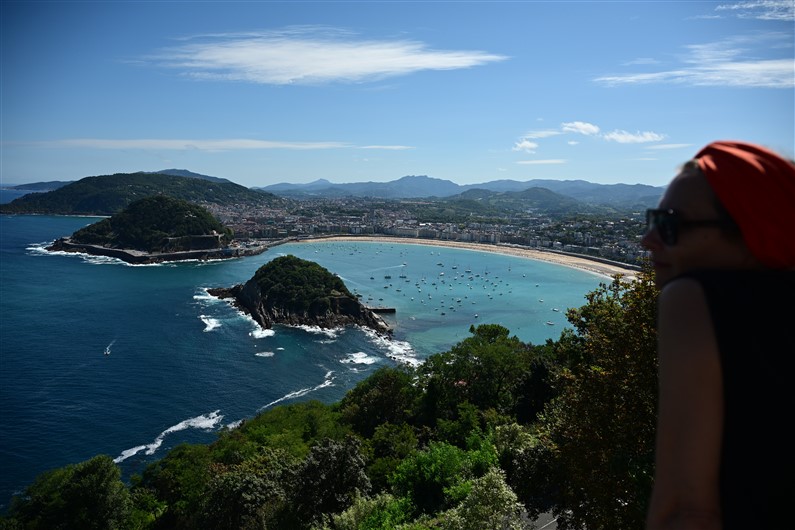
From the summit, La Concha Bay unfolds in its entirety, and this is probably one of the best places to get a sense of San Sebastián’s geography. You can reach the top via the famous funicular, which has been in operation since 1912. It’s a little attraction in itself, with its cars lending the ride a touch of retro charm.
There’s also a historic amusement park at the summit. We didn’t try out the rides, but honestly, we’d come mainly for the view. And we weren’t disappointed.
A must-do even if you’re not a big fan of rides: the view is definitely worth the climb (expect to pay about 5 euros each way).
Head back down toward the old town
After this detour up in the hills, we got back on the bus to head to the historic center.
And here, the atmosphere changes completely. La Parte Vieja, San Sebastián’s old town, is a true paradise for lovers of narrow streets, charming facades, and—above all—fine dining. Because here, it’s impossible to talk about San Sebastián without mentioning pintxos.
The idea is simple: you walk into a bar, check out what’s on offer, pick out a few bites, eat standing up or at the bar, and then head off to another spot.
And above all, save a little room for dessert! Because in San Sebastián, there’s one must-try treat for those with a sweet tooth: Basque cheesecake.
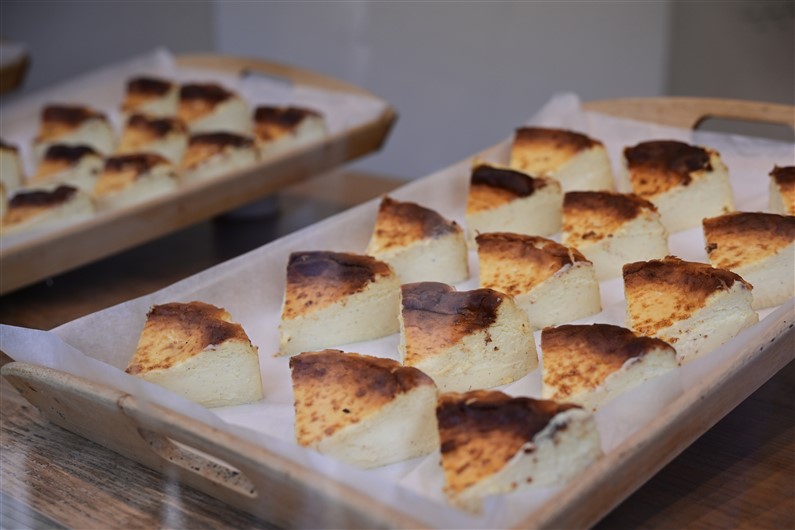
You’ve probably already come across it on Instagram or at a bakery near you. This cheesecake—which looks almost burnt, has no crust, and features an incredibly creamy center—has become a true global phenomenon.
And yet, its history is fairly recent. Contrary to what its name might suggest, it is not an old, traditional specialty of the Basque Country passed down from generation to generation. The cheesecake we know today was created in the 1990s in the old town of San Sebastián, at the bar La Viña, under the guidance of Santiago Rivera.
Through constant experimentation in the kitchen of his family’s restaurant, he perfected this very unique version of cheesecake: baking it at a high temperature gives it a deeply caramelized, almost burnt surface, while the inside remains melt-in-your-mouth and creamy.
The recipe first gained popularity in the Parte Vieja, particularly along the pintxos route, before spreading far beyond the borders of San Sebastián. Then, social media and chefs from around the world got involved, and the Basque Cheesecake became a true international star. In 2021, The New York Times even named it one of the culinary trends of the year.
So, of course, there was no way I could visit San Sebastián without trying this little gem. We checked out BASSK Cheesecakers, a shop specializing in Basque cheesecake, with several locations throughout the city. And I really loved their version: a beautifully caramelized crust on the outside, a soft and creamy center, and that subtle hint of cheese that perfectly balances the sweetness. The chocolate version looked really tempting, too!
And ultimately, it’s a pretty enjoyable way to explore a city. No need to plan a huge, two-hour meal: you nibble, you taste, you walk, and you start all over again. Even if you only have one day, take the time to get lost in the streets of the Parte Vieja.
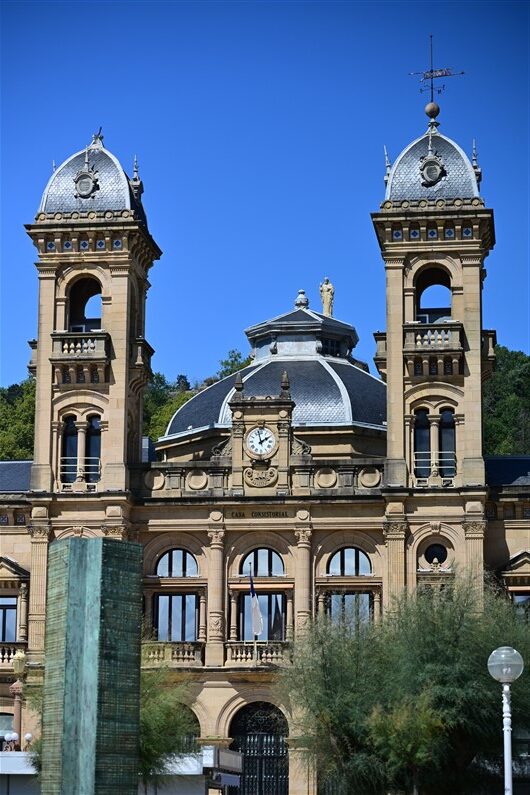
In particular, you can visit the Plaza de la Constitución, the Basilica of Santa María, the Church of San Vicente, or the harbor.
But my main piece of advice would be not to overplan this part of the day. San Sebastián is a city that’s best explored on foot. What could be better than letting the aromas wafting from the bars lead the way…
Day 2 — From Zarautz to Bilbao: The Coast as a Guiding Thread
On the second day, we left San Sebastián and headed for Bilbao.
This day was the most “road trip”-like of our getaway. Our itinerary took us through Zarautz, Getaria, Zumaia, and then San Juan de Gaztelugatxe, before we arrived at our hotel outside Bilbao in the evening.
It was a busy day, then, but with enough flexibility to stop whenever a scenic view made us want to get out of the car.
Zarautz → Getaria: a lovely walk along the ocean
Between Zarautz and Getaria, a pedestrian path runs along the coast. The walk offers beautiful views of the ocean and is a much more pleasant way to travel between the two towns than simply getting in the car and driving straight to the next stop.
And then you begin to understand what makes this region so charming: the sea is never very far away.
Getaria: a small fishing village and the birthplace of Balenciaga
Getaria was one of my favorite places that day. The village has a pretty harbor, narrow streets that wind up and down, and that atmosphere typical of coastal villages in the Basque Country.
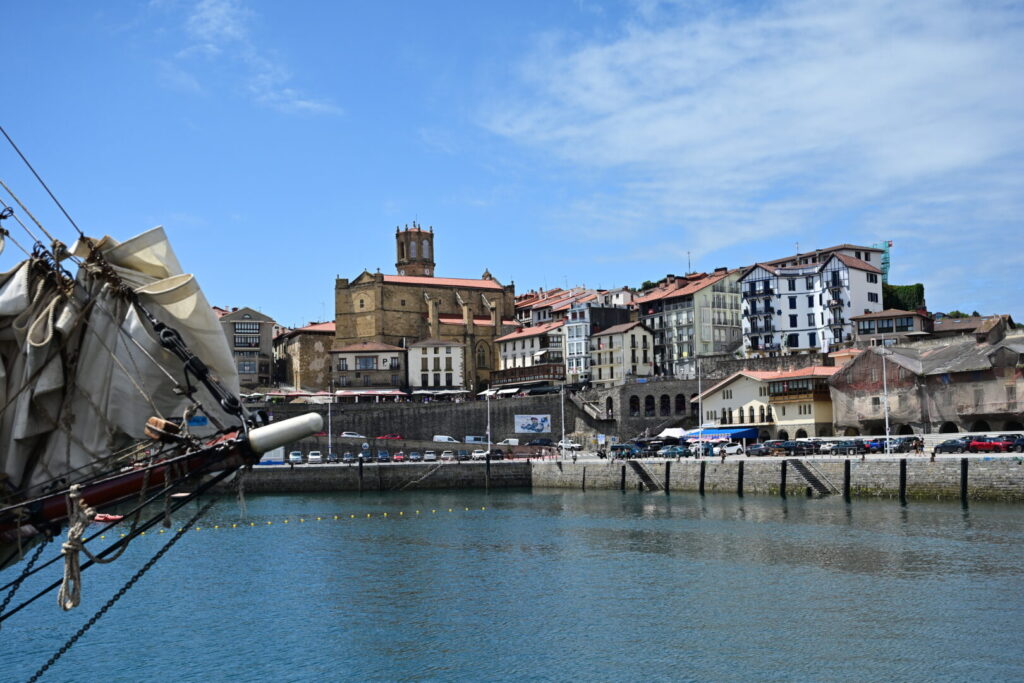
But Getaria is also closely linked to a much more unexpected name: Cristóbal Balenciaga. The great Spanish fashion designer was born here in 1895, in this small fishing village. And if you know even a little about the history of fashion, it’s quite surprising to imagine that one of the greatest fashion designers of the 20th century hailed from this little corner of the Basque Country.
We didn’t visit the Cristóbal Balenciaga Museoa because my boyfriend isn’t exactly the biggest fashion fan on the planet, but if you love fashion, design, or the history of clothing, I think it’s definitely a stop worth adding to your itinerary. The museum is dedicated to the designer’s work and offers a deeper understanding of his career and the impact he had on the history of haute couture.
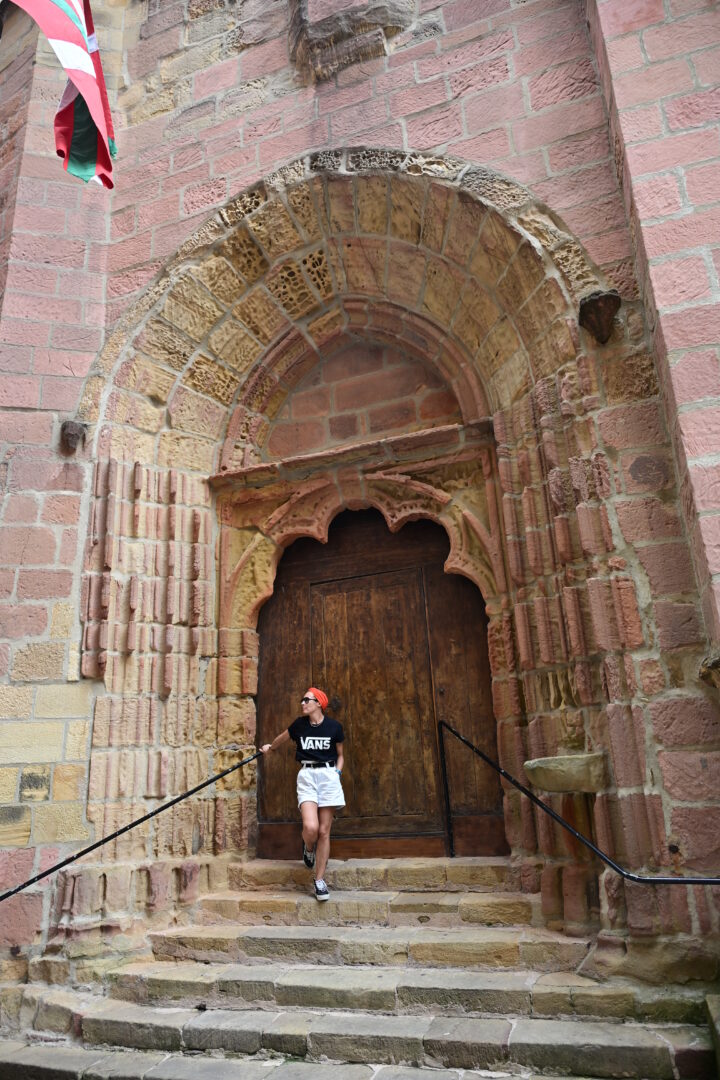
On the other hand, as we wandered through the city, I found it hard not to stop at a little shop that sells truly local souvenirs—not the “Made in China” kind. Piapia is exactly the kind of shop I love to discover when I’m traveling: not necessarily a must-see spot you’ll find in every guidebook, but a lovely selection that makes you want to take the time to look around.
And while we’re on the subject of great spots, you’re starting to get to know me: I can’t pass through a city that has a great ice cream shop without checking it out for myself.
And in Getaria, it’s at Dona Doni where it all happens. I tasted a sorbet there that alone is worth stopping for: mango and Espelette pepper. A combination that seems unlikely on paper, but absolutely delicious on the palate. The sorbet actually won an award in 2021 at the Gelato Festival World Masters. The mango provides a very fruity and sweet flavor, and then the chili pepper gradually comes through.
Zumaia and the Flysch: A Landscape That Tells the Story of the Earth
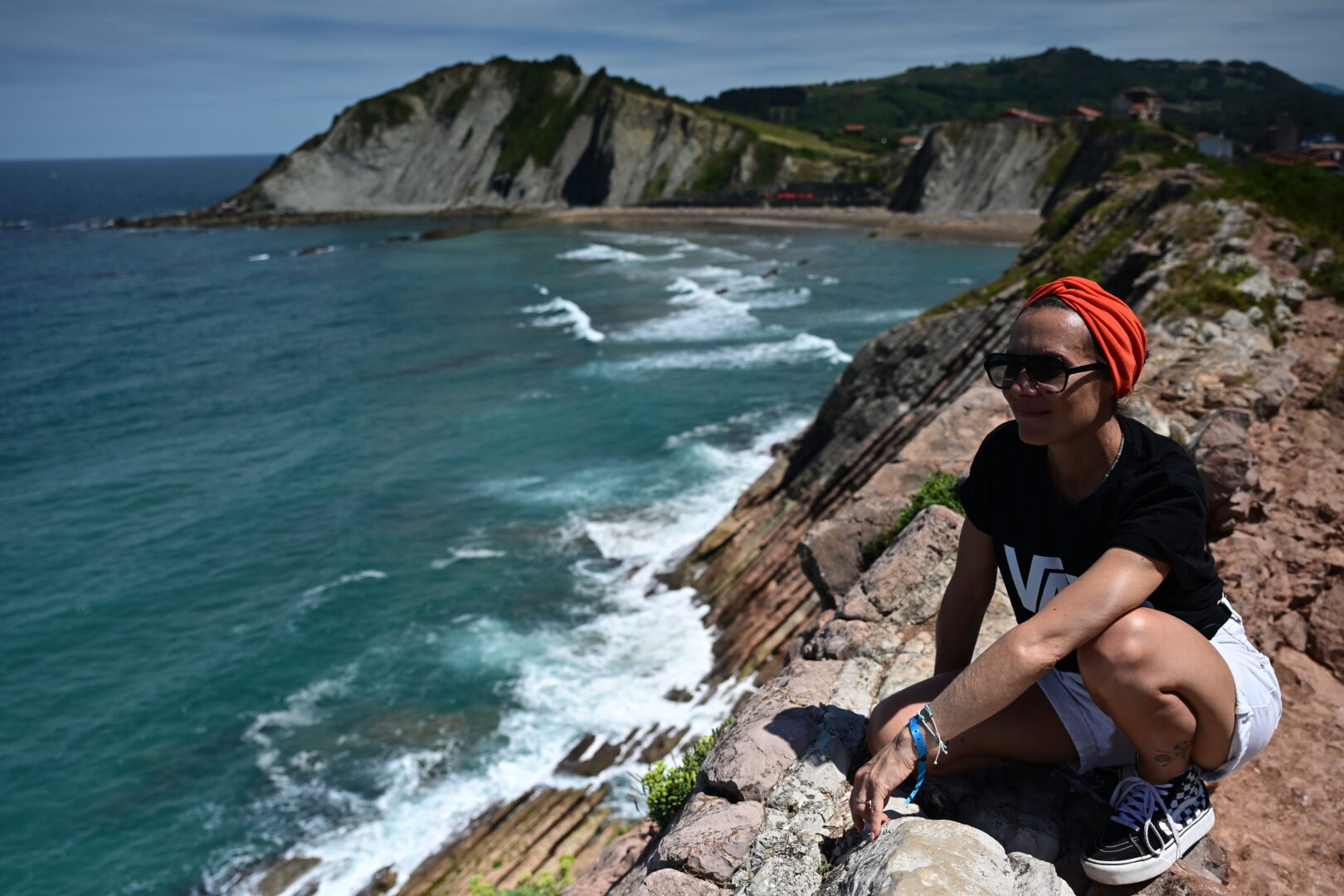
After Getaria, we continued on to Zumaia. And there, the scenery changes completely. The cliffs of Zumaia are famous for their flysch—those impressive rock strata that seem to have been stacked one on top of the other.
Except that they actually tell a much older story. These layers of rock formed on the ocean floor over millions of years, before gradually being raised by geological movements and then shaped by erosion. The result: when you stand before these cliffs, you literally have tens of millions of years of our planet’s history right before your eyes.
It’s quite breathtaking. And above all, it adds another dimension to what might, at first glance, be nothing more than a beautiful coastal landscape.
A quick tip for Zumaia
Be careful with parking. Many lots require payment, so it’s best to plan ahead before you go. And if you really want to enjoy the Flysch, be sure to check the tide schedules as well. The landscape and access to certain parts of the coastline can vary greatly depending on the sea level.
San Juan de Gaztelugatxe: Even if you don’t have a ticket, go for it!
The last major stop on our day’s journey before Bilbao: San Juan de Gaztelugatxe.
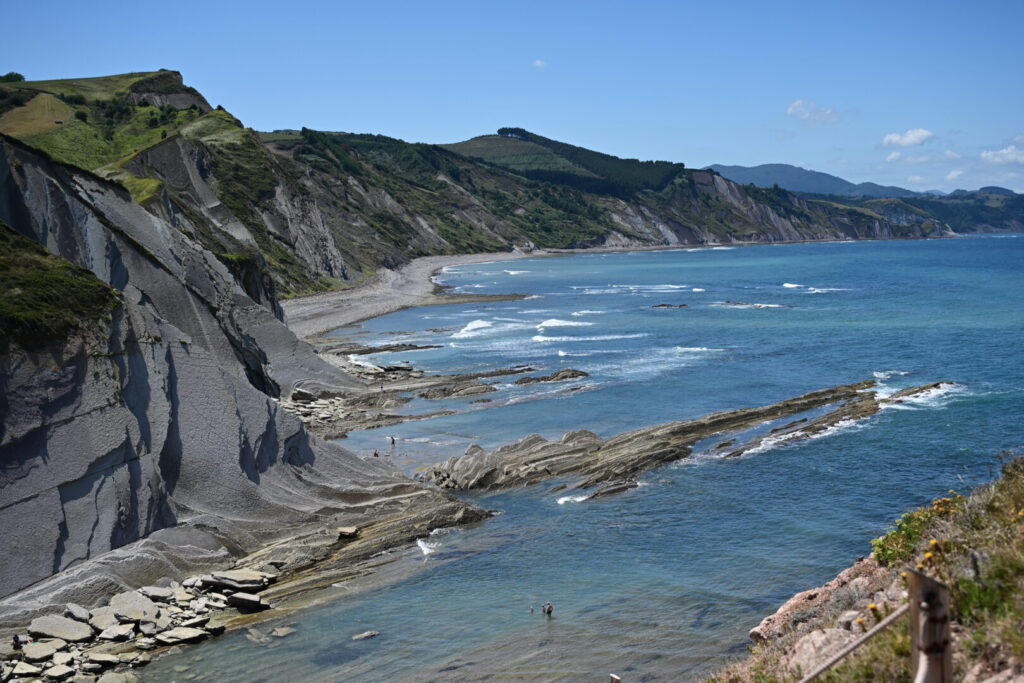
Imagine this: a small islet connected to the mainland by a stone bridge, with a staircase leading up to a small hermitage perched at the top. The scenery is spectacular. And it became even more famous after appearing in *Game of Thrones*.
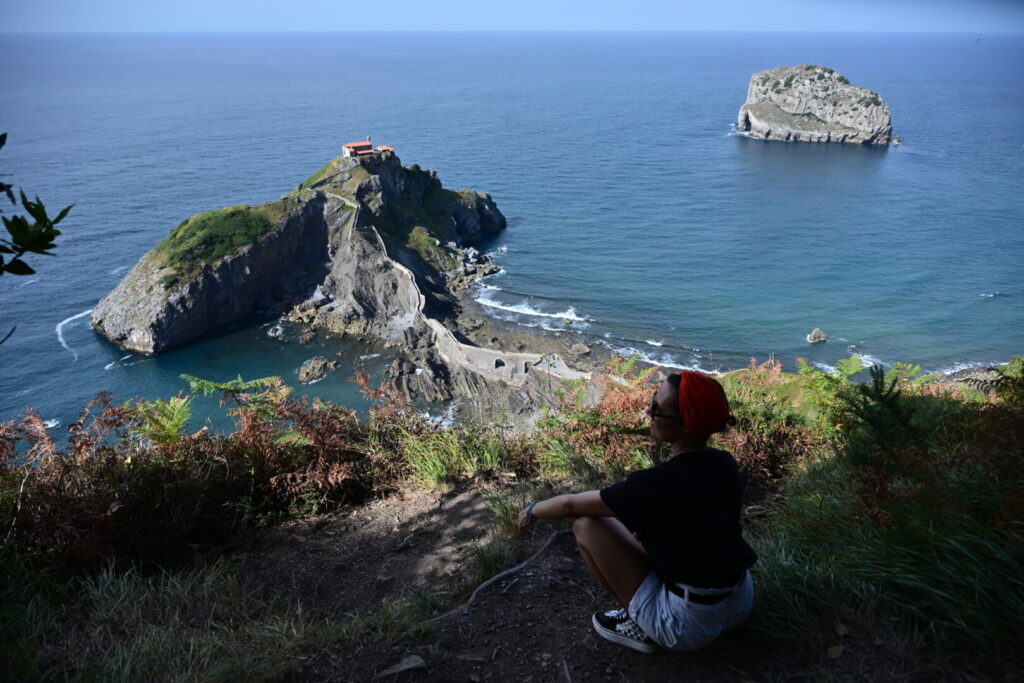
We hadn’t made a reservation…
If you’d like to visit the hermitage, it’s best to check the access conditions in advance and reserve a time slot when necessary. In fact, for some time now, access has been limited to a certain number of visitors per day. And since it was the holiday season and we’d planned this road trip at the last minute, needless to say, all the spots were already taken.
But if, like us, you don’t have a ticket, don’t turn back right away. There are several lookout points around the site where you can enjoy magnificent panoramic views.
And I especially liked the one we found on the way to Bakio. From the parking lot, head toward Bakio: at the bottom left, a small path branches off to the right into the forest. It leads to a truly spectacular viewpoint overlooking San Juan de Gaztelugatxe.
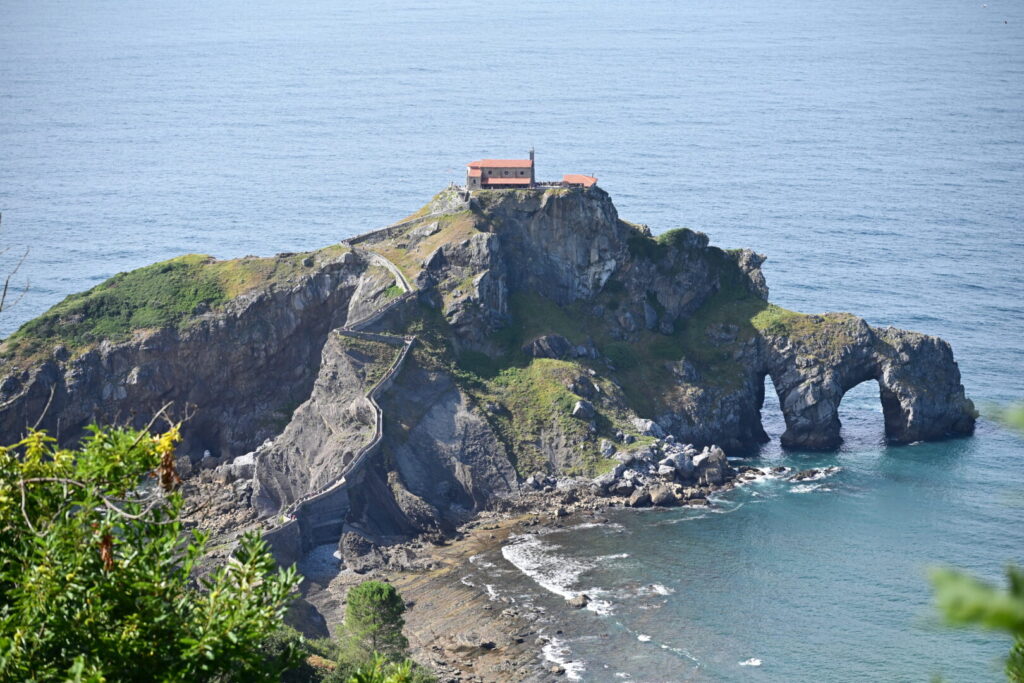
And honestly, even though we didn’t complete the entire route, we thought it was well worth the detour.
After a busy day, we hit the road again toward Bilbao. We decided to stay outside the city, in Sondika, rather than insist on finding a hotel right in the center. We spent the night atthe Hotel Blu Sondika.
Nothing particularly extravagant, but a perfectly decent hotel for a one-night stay: clean, convenient, and, above all, well-suited to our needs at the time—namely, to drop off our things, get some sleep, and set out to explore Bilbao the next day.
Day 3 — Bilbao, from Casco Viejo to the Guggenheim
After spending the night in Sondika, we headed to Bilbao for our last day. It was a complete change of scenery. After the small ports and rugged cliffs of the previous day, we found ourselves in a much more urban setting.
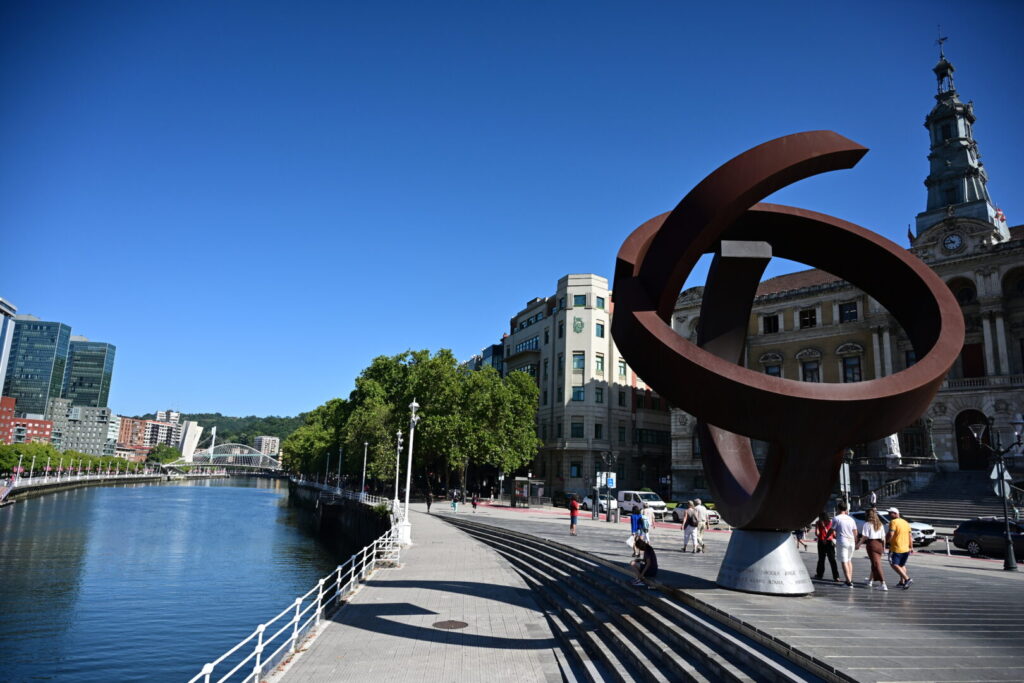
Bilbao is now known worldwide for its architecture and cultural scene, but its history is closely tied to industry and commerce. The city’s transformation beginning in the 1990s—symbolized by the opening of the Guggenheim in 1997—has profoundly changed its image. But what I liked most was precisely that Bilbao is more than just its museum.
Start with Old Bilbao
Before visiting the city, we first had the chance to Find a free parking spot on the street!
We had originally planned to go to the Indigo Aparcamiento Residentes Ciudad Jardín parking lot. But when we arrived in the neighborhood, we noticed that the parking spaces in the area were marked in white and were therefore free all day. Luckily , we found a spot.
And it turned out to be a great choice: we were close enough to the Guggenheim to explore the city on foot, and we had planned to visit the museum at the end of the day.
So we left the car there while we were sightseeing, then came back to pick it up before heading out again. Be careful, though: always check the signs on site, because parking rules can vary from street to street.
So we started our day by strolling through the Casco Viejo, the old town. Colorful streets, small shops, cafés, pintxos bars… The atmosphere is much livelier and more down-to-earth than the highly architectural image one might have of Bilbao before visiting. The Ribera Market is also worth a visit.
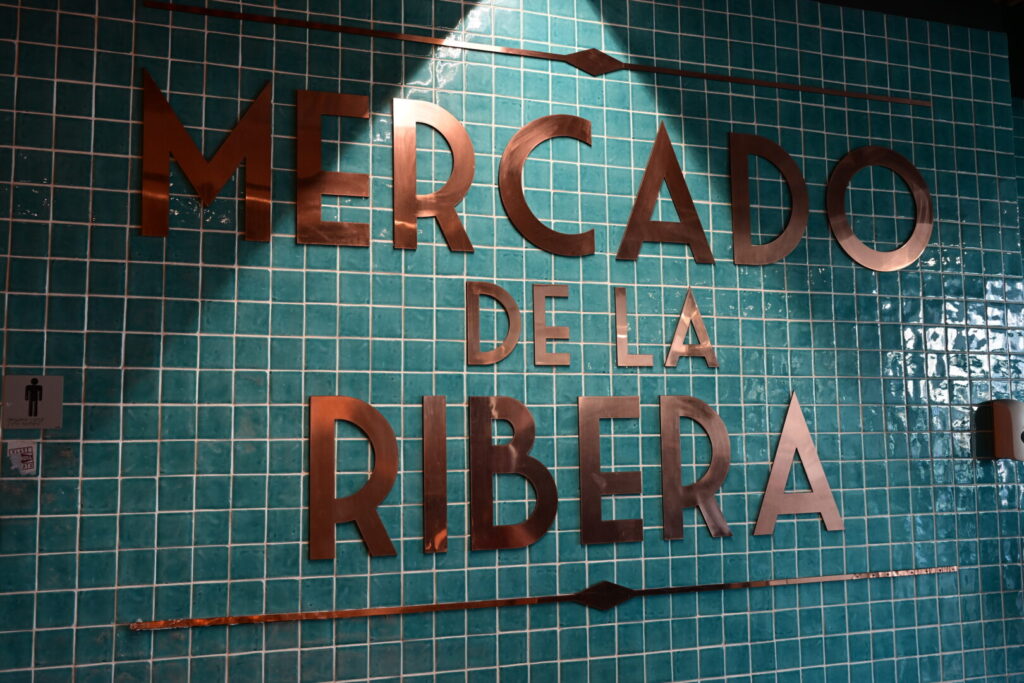
And as is often the case, I’d advise you not to try to stick to a route that’s too specific. Just wander around. Look up and admire the facades. Pop into a shop. Stop for a coffee. And grab a bite to eat whenever you feel like it.
As usual, I’m still sharing my favorite shopping and food picks with you:
- Marmoka: a lovely artisanal boutique that aligns with my values, because you can find handmade products there for women who value originality and mindful production. I was actually able to find some headbands that are perfect for my hair.
- El Globo: one of the city’s most popular spots for food and drinks. In addition to their excellent selection of pintxos, they also offer a wide variety of drinks, ranging from local wines to craft beers and classic cocktails.

- Bolge Café: For a relaxing break before heading to the museum, I recommend this spot, where you can enjoy the famous Basque cheesecake.
A Touch of Notting Hill in Bilbao: Iralabarri
If you like neighborhoods that are a little off the beaten path, Take a detour to Iralabarri, in the Irala neighborhood. It’s nicknamed the “Notting Hill of Bilbao,” and when you see its colorful little houses, you’ll quickly understand why.
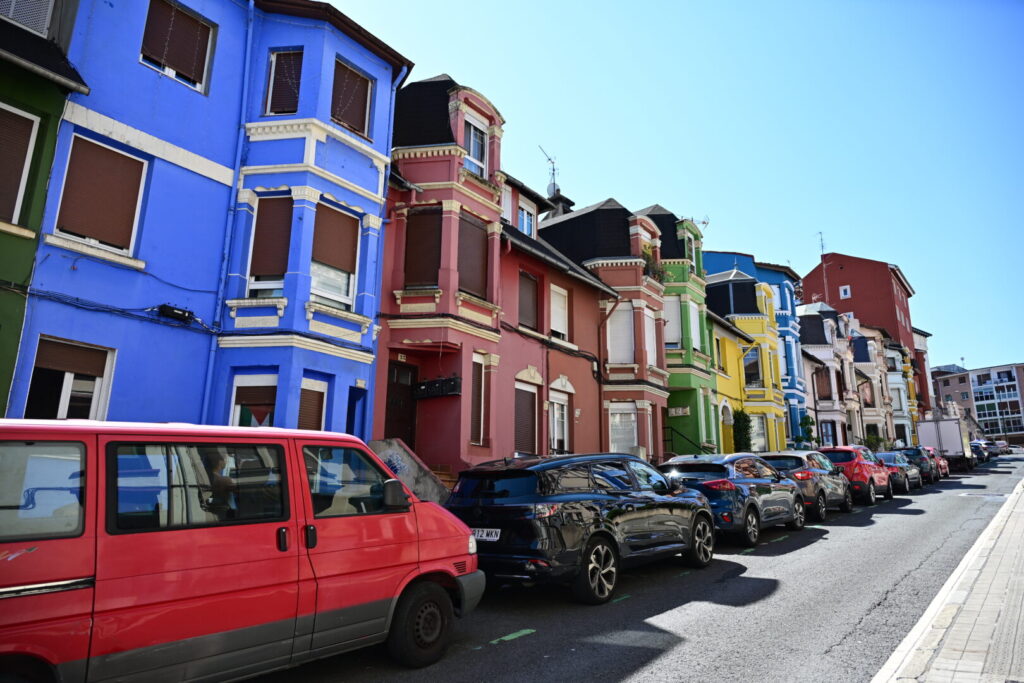
Built around 1916 at the initiative of entrepreneur Juan José Irala, the neighborhood was originally intended to house the workers and employees of his large industrial bakery. Its row houses, with their small gardens and facades in various colors, were designed with inspiration drawn from British workers’ housing estates, incorporating a few Basque touches.
Today, Iralabarri remains a residential neighborhood, far from the hustle and bustle of Casco Viejo and the major tourist attractions. To find the most photogenic houses, take a stroll along Baiona, Kirikiño, and Zuberoa streets.
Before heading to the Guggenheim, I also recommend taking a quick detour to the Alhóndiga, now known as Azkuna Zentroa.
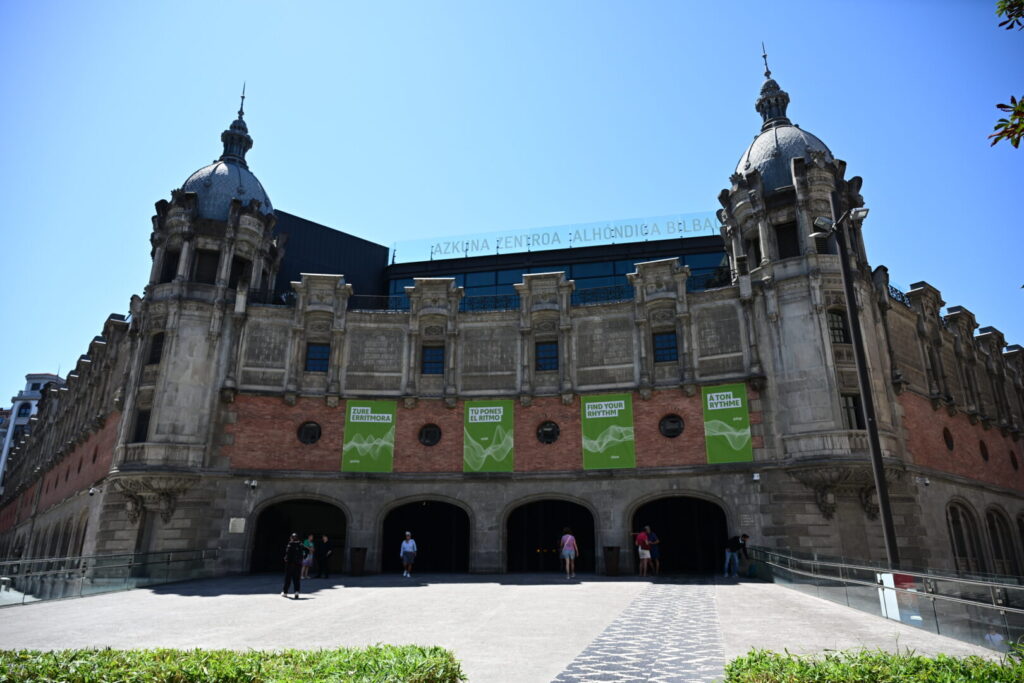
Originally, this building was a huge warehouse used to store wine, oil, and canned goods. Today, it has been transformed into a cultural center, and its transformation is definitely worth seeing.
The project was entrusted to our Frenchman Philippe Starck, who designed a massive atrium spanned by 43 columns, each one unique, intended as a nod to the various cultures and periods in the history of architecture. Some are classic, others more contemporary, and together they give the place a real personality.
Take the time to stroll through this vast space, look up, and take in the details… and if you’re there on a sunny day, be sure to head up to the terrace as well: it offers a different view of Bilbao, and part of the space is even set up as a sun deck.
The Guggenheim: The Grand Finale
And of course, you can’t spend a day in Bilbao without ending it at the Guggenheim. Even if you’re not particularly fond of contemporary art, Frank Gehry’s building alone is worth the visit. Its undulating shapes, titanium panels, and riverside location make it one of the city’s most recognizable buildings.
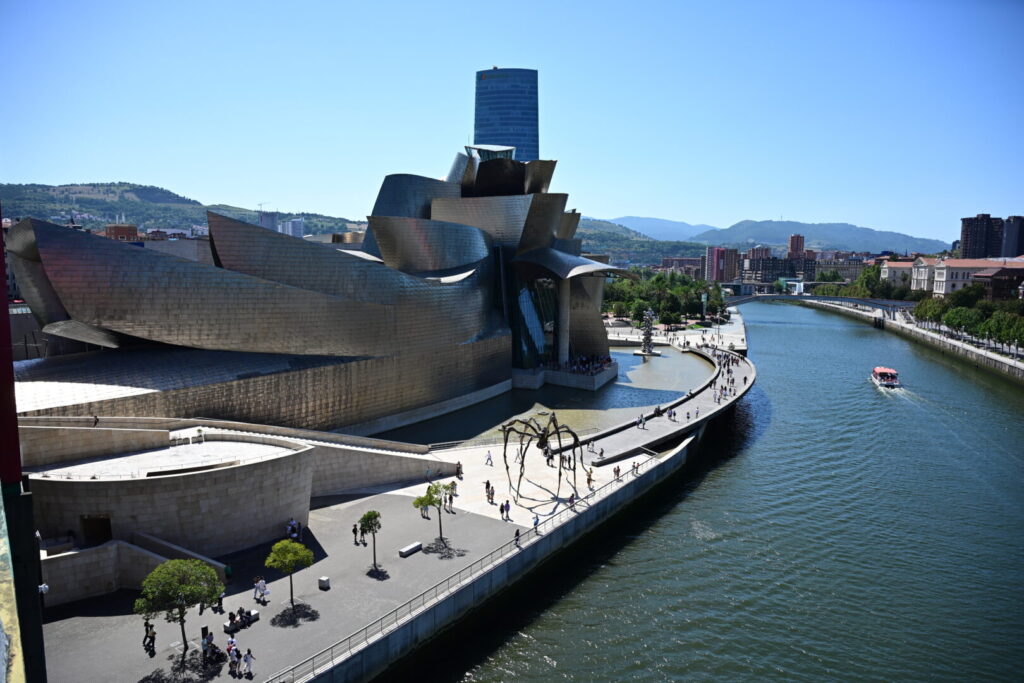
But what’s interesting is to place the museum within the context of Bilbao’s history. Its opening in 1997 contributed to the city’s profound transformation and its growing international prominence. And when you walk around the Guggenheim today, it’s hard to imagine what the cityscape was like before that transformation.
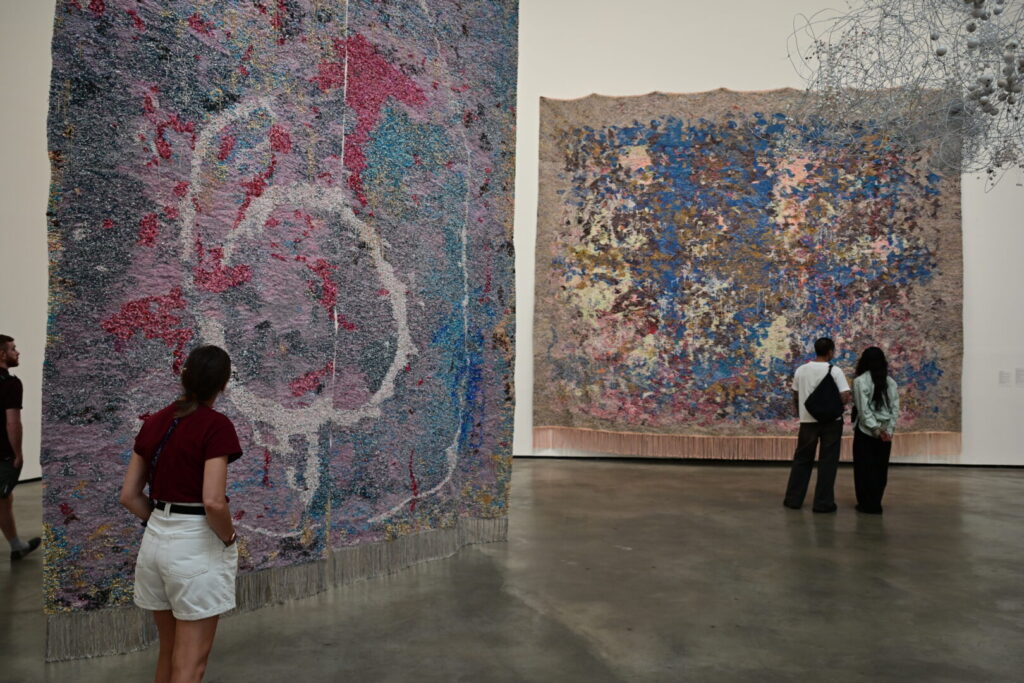
Inside, however, our opinion was more nuanced. After visiting the BROAD in Los Angeles and the MET in New York, we have to admit that it was hard to avoid making comparisons… and that some of the works on display left us wanting a little more. It just goes to show that even in such an iconic museum, it all comes down to personal taste and perspective.
We really enjoyed Yayoi Kusama’s immersive experience, though—her *Infinity Mirrored Room – A Wish for Human Happiness Calling from Beyond the Universe*, an installation that truly immersed us in her world and reminded us of what we saw in Tokyo, Japan, atthe teamLab Planets exhibition.
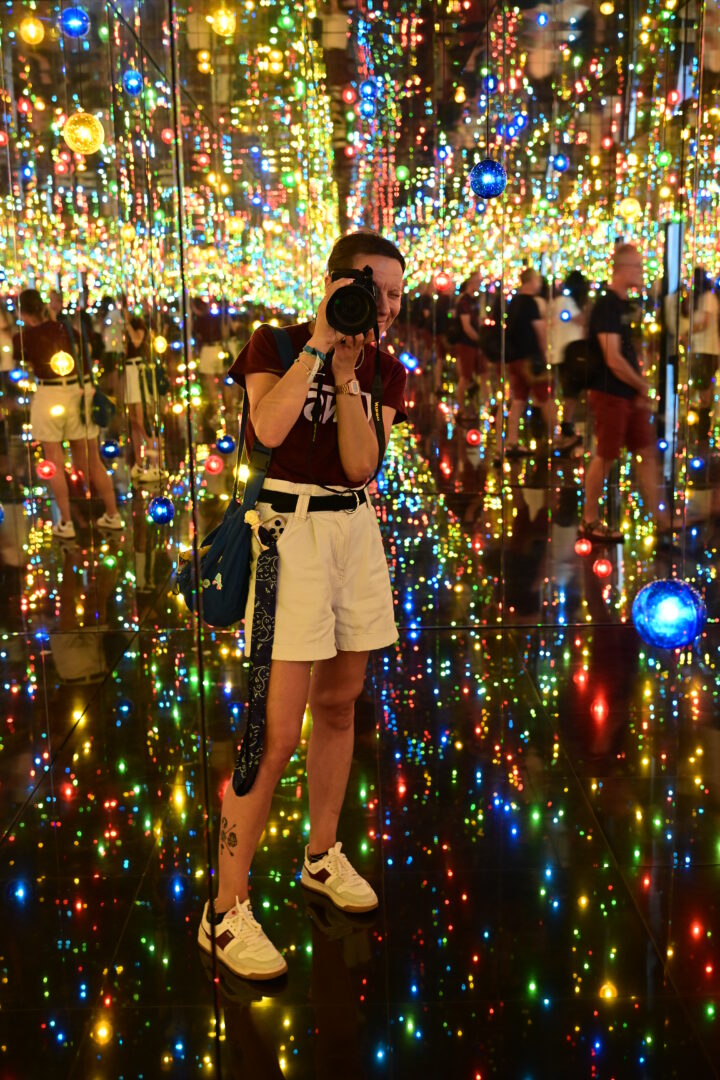
The concept is pretty simple: a small room covered in mirrors and lights that makes you feel as if you’re immersed in an endless universe. You walk in, and for a few moments, you’re not quite sure where the room ends. The experience is quite mesmerizing.
My advice: Plan ahead!
This exhibit has limited capacity, so you may have to wait a bit to enter. The museum uses a virtual line for this installation; you’ll need to scan a QR code and check in to join the line.
There you go—I hope this little getaway has inspired you to add it to your list of places to visit in Europe.
As always, I’m more than happy to answer any questions you may have in the comments, so please feel free to ask.
See you soon for new adventures.